
News
[OPINION] Pastor Ibiyeo-money: Get Behind Me, Satan!

Tunde Odesola
Wracked by a head-splitting fever and a head-aching red eye, this article may not see the light of day. But if it’s ever published, dear reader, know that this article is a product of pain, lethargy, tiresomeness and hissing. The meaning of headache is truly a pain in the head.
When I woke up early Monday morning, the pain in my right eye was tormenting. I couldn’t differentiate between a comma and a full stop. The wider I opened my eyes to tell the difference between the two punctuation marks, the more the tail of the comma disappeared, leaving behind a dot that looked exactly like a full stop. By 11 a.m., my body felt like it had been run over by a bus. I took some pain-relieving tablets, got an eye-drop medication and headed into the day, all the same.
On Tuesday morning, I couldn’t open my bloodshot right eye. I felt my hands and legs were bound to a rock, like Oedipus. For relief, I felt like closing my aching eye all day, but work had sounded its worship bell, so I headed to answer the roll call. As I drove to work, I struggled to keep my right eye open, setting my eyes water to flow freely, and the left eye, in kinship sympathy, had joined the right eye to tear.
I hurt like a man under whose right eye three alligator pepper seeds had been tucked. By who? I shall reveal that later. Alone, I suffered seven plagues – headache, eyeache, runny nose, fever, tearing, sleepiness and lethargy. Do note that the whole of biblical Egypt suffered just 10 plagues in the hands of Moses.
The fast sequence of bad news breaking in Nigeria could be tricky for a columnist to follow, more so for a columnist outside Nigerian shores. Therefore, a columnist worth his salt will be on the news trail all day, every week, taking notes of newsy issues and zeroing down on one, two or more en route to the deadline.
MORE FROM THE AUTHOR: OPINION: Eedris Teargasses Tinubu; Ali Baba Besaints Obasanjo
On Wednesday morning, I had no eyes to follow Nigerian news, so I said to myself, “I cannot come and kill myself o; I will not write any article this week.” My only desire was just to shut my eyes in perpetuity. By the time I returned from work on Wednesday night, my enervated body was a little energised as butterflies from the nectarean Muse flew along my way. Briefly, I shook off my lethargy and started to monitor trending news from Nigeria.
Terrible news, as usual, sat snugly on the front pew. My news monitoring revealed that in the last few days, over 70 Nigerian Christians were reportedly killed in the Middle Belt region by suspected Muslim herders.
In the dying minutes of Wednesday night, I checked various talking points on Nigeria’s socio-political scene. There was no condemnation of the massacre by any big-name Nigerian cleric. However, there were get-rich-quick blasphemies by some church leaders. The blasphemies caught my attention. Instinctively, I felt like grabbing my laptop and scribbling. But while the spirit was willing, the body was weak as my head pounded and my eye peppered. I sat at my table, but the only request my body members were making was sleep, sleep, sleep while my eyes teared away, steadily.
MORE FROM THE AUTHOR: OPINION: Letter To Alaafin Abimbola Owoade
“Why the silence from the Nigerian clergy? They don’t want to heat the polity? Did the government reach out to them not to speak up publicly? To whom do Nigerian clergy owe their allegiance? To God or Bola Tinubu administration? Or to Mammon?” Questions cascaded down my journalistic mind. Savage country, savage leadership.
Thursday afternoon, none had changed for the better among my troubled body parts. Headache. Eyeache. Runny nose and tiredness. Guess what? I never stopped going to work for a day. But I booked an appointment to see the doctor. Because I didn’t book an emergency appointment, I was scheduled to see the doctor on Friday. Today is Thursday – my deadline to submit my article, and I’m going to work in less than three hours. Can I still make it? I’ll try. I’ll try because I don’t want no thief-looking pastor to claim his god of Mammon struck me with sickness. However, if the article fails to make it to the newsstand, it’s not the god of the fake pastor who stopped it; it’s stress-induced fever, lest any thief should boast. I don’t have lip blisters as telltales of sickness. For me, the telltale signs of fever or any sickness in general are inflamed eyelids and reddish eyeballs. I’ve been like that since my years of innocence.
My red eye drips tears unabated. All the eye wants to do is shut down. It’s utterly painful opening it. Pastor Ibiyeo-money, who has never healed any known disability in any person, would claim his god afflicted me with a sight problem, and his congregation would roar, “Hallelujah!!!”
In an outrageous video, Ibiyeo-money said Jesus Christ hated poverty and that Christ never associated with the poor. The cold-blooded way Ibiyeo-money twisted the Holy Bible to assert his warped teaching belonged only in hell.
MORE FROM THE AUTHOR: Shameful Letter On Tinubu’s Slavish Assembly
A fake surgeon clutching a scalpel, Ibiyeo-money grabs the balls of a man looking for the fruit of the womb, cuts open his scrotum, throws his testicles in a bottle, gives the bottle to him, and tells him his prayers are answered. But Ibiyeo-money himself sees a doctor monthly. He assures his congregation that his prayer was sufficient for their security while he goes about in bulletproof cars and a horde of armed security men. Ibiyeo-money is the healer who cannot heal himself. In looks and deeds, Ibiyeo-money is the archetypal Agba Yahoo. He talks slowly and self-assuredly – almost in a whisper – like a man of wisdom, age and grace, but will bow down on his face and worship Satan if he sees 30 shekels of silver. I didn’t have a clear picture of those Jesus chased out of the temple until now.
In his atrocious sermon, I suspect Ibiyeo-money was talking about Jesus of Port Harcourt, and not Jesus of Nazareth, who was born in a manger by a poor carpenter father and who rode on a donkey into Jerusalem, instead of a horse. Because I don’t worship money like Ibiyeo-money, I solemnly offer to teach him for free the importance of Jesus riding a donkey into Jerusalem.
Preached on a Mount of Beatitudes, Jesus’ seminal sermon called “The Beatitudes,” was an opportunity to overplay wealth acquisition, but He downplayed it by emphasising poorness, meekness, righteousness, mercifulness and peacefulness. In the sermon, Jesus says, “Blessed are the poor in spirit; For theirs is the kingdom of heaven.” I can see Ibiyeo-money is rich in spirit.
In ‘The Beatitudes’, if Jesus was averse to poverty, He wouldn’t have rewarded the poor in spirit with the kingdom of heaven. He would’ve preferred people like Ibiyeo-money who are rich in spirit.
Since all these donkey’s years of professed anointing, miracles, signs and worship, hasn’t the man of god come across the teaching of Jesus which says in Matthew 19:24, “I’ll say it again–-it is easier for a camel to go through the eye of a needle than for a rich person to enter the kingdom of God!” If Jesus glamorised riches as Ibiyeo-money does, he wouldn’t speak against wealth acquisition.
Both the Old and New Testaments of the Holy Bible contain 1,189 chapters. Ibiyeo-money just needs to daily read four chapters of the big Bible he carries about like a signboard, and about nine and a half months, he would have read all the references I pointed out to him.
I’ll close with these passing shots. Jesus told some of those He healed or taught to sell all their earthly property and follow him. If Ibiyeo-money was the one taken to the peak of the world by Satan, and told to bow down and worship, what would he do? I hear him shout, Get beside me, Satan!
Email: tundeodes2003@yahoo.com
Facebook: @Tunde Odesola
X: @Tunde_Odesola



News
NAF Launches Attack On Terrorists In Borno

The Nigerian Air Force, NAF, operating as part of the joint task force of Operation Hadin Kai, has carried out a coordinated air interdiction at AbbagaJiri in the Timbuktu Triangle, Borno State.
According to Air Commodore Ehimen Ejodame, Director of Public Relations and Information of NAF, the air strikes successfully paved the way for ground troops.
He explained that the operation was based on actionable intelligence from multiple sources, which confirmed the presence of terrorists, their structures, and concealed logistics facilities in the area.
Ejodame stated that NAF air assets were deployed in integrated surveillance and precision strike roles to target identified threats.
READ ALSO:NAF Hits Bandit Logistics Hub, Neutralises Many In Zamfara
The operation aimed to degrade terrorist capabilities, deny them sanctuary, and shape the battlefield for ground forces, all while strictly adhering to rules of engagement and protecting civilians.
He added, “The Identified terrorist structures were decisively engaged and destroyed, denying the terrorists freedom of action, while a follow-up engagement neutralised armed elements observed converging on the location.”
“Subsequent advances by ground troops into the area confirmed the effectiveness of the air strikes and validated the success of the joint air–land operation.”
Speaking on the mission, Chief of the Air Staff (CAS), Air Marshal Sunday Aneke, said, “The success of the mission reflects the NAF’s resolve to dominate the air domain in support of joint operations.”
READ ALSO:NAF Hits Bandit Logistics Hub, Neutralises Many In Zamfara
Aneke further emphasized that the operation highlighted the service’s commitment to providing precise and decisive air power in support of ground forces.
In his words, “We will continue to deny terrorists freedom of movement, sanctuary, and logistics wherever they seek to hide. Air operations will remain relentless and intelligence-driven.”
“Our operations are carefully planned and intelligence-led, ensuring maximum effect on hostile elements while safeguarding innocent civilians.”
READ ALSO:NAF Announces Two-hour Road Closure In Abuja For 10km Walk
“The Nigerian Air Force will sustain pressure until terrorist networks are completely dismantled.”
He further noted that the operation showcased NAF’s aggressive stance, precision employment of airpower, and dedication to sustained joint operations.
Aneke added that such missions play a crucial role in enabling ground troops to maintain momentum and deliver decisive outcomes against terrorist networks threatening lives, property, and Nigeria’s national security.
News
Lagos Parks To Close For Maintenance – State Govt
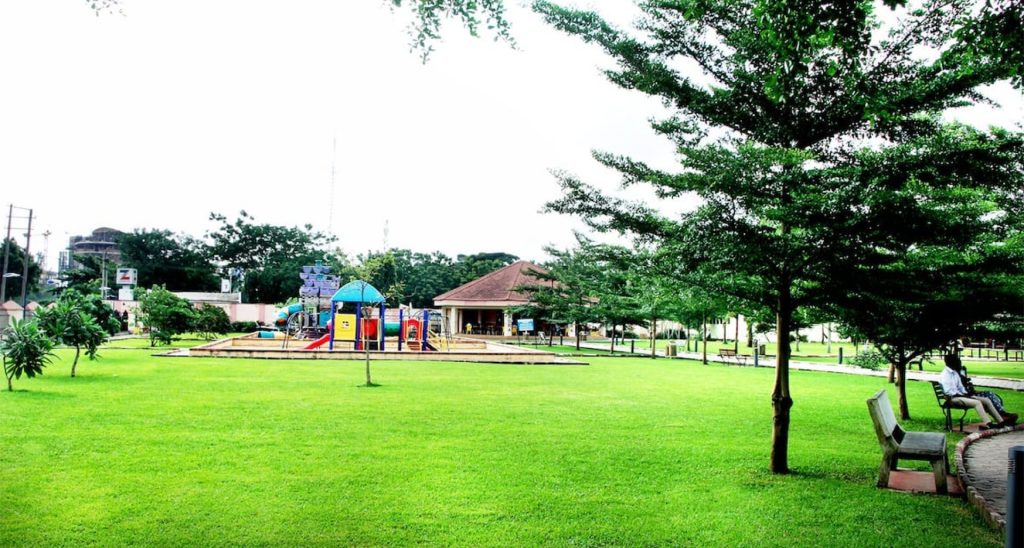
The Lagos State Parks and Gardens Agency, LASPARK, has announced that all public parks under its management across the state will be temporarily closed for routine maintenance and upgrades.
In a statement released on January 9 and shared via its official platforms early Saturday, LASPARK said, “All parks under our management will be closed to the public from January 12 to January 31, 2026.
“This follows increased visitor activity during the recent festive season.”
The agency listed several popular recreational spots that will be affected, including “Ndubisi Kanu Park, Alausa JJT Park, Dr. Finnih Abayomi Park in Oregun, and all other LASPARK-managed parks across Lagos State.”
READ ALSO:
Explaining the reason for the closure, LASPARK added, “The temporary shutdown is necessary to carry out essential landscaping, facility repairs, and general upgrades to ensure that our parks remain safe, clean, and enjoyable for residents and visitors.”
The agency also stressed that the exercise aligns with its broader mandate, noting, “This maintenance programme is part of our commitment to providing well-maintained green spaces that promote relaxation, wellness, and environmental sustainability.”
LASPARK assured residents that “all parks will reopen at the end of the maintenance period.”
News
PAP Sends Additional 34 Foreign Post-graduate Scholarship Beneficiaries To UK Varsities
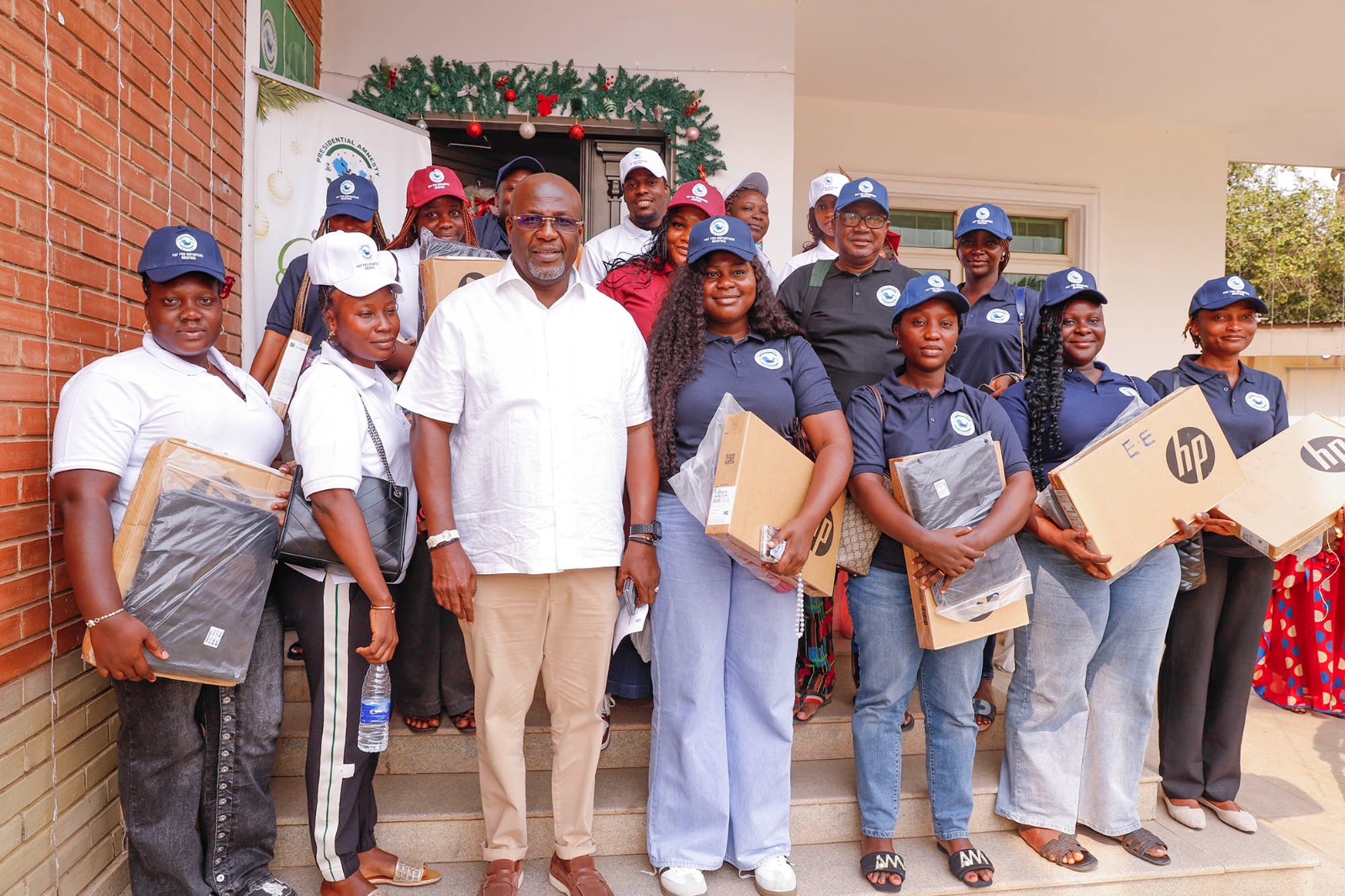
The Presidential Amnesty Programme (PAP) has deployed an additional 34 foreign post-graduate scholarship beneficiaries to various universities in the United Kingdom for the 2025-2026 academic year.
This was contained in a statement made available to newsmen in Warri by Mr Igoniko Oduma, Special Assistant on Media to Dr. Dennis Otuaro, the Administrator, PAP.
According to the statement, the scholars’ programmes include data science, fintech analytics, cyber security, international energy law and policy, construction project management, public health, agri-food technology, electrical and petroleum engineering, among others.
The statement added that more foreign post-graduate scholars will be sent to UK universities in the current academic session.
“In December 2025, nine students, who were the first set of offshore post-graduate scholarship developments by the PAP Administrator, Dr Dennis Otuaro, for the 2024-2025 academic year, graduated from their various programmes in UK universities.
READ ALSO:PAP Scholarship Scheme Vehicle For Better Future For Niger Delta —Otuaro
“Otuaro has deployed over 9000 students to universities within and outside Nigeria for different industry-relevant programmes since he assumed office in March 2024,” the statement partly reads.
Speaking at the pre-departure orientation programme for the scholars at the PAP headquarters in Abuja, on Thursday, Otuaro said that the large-scale deployment was aimed at making the Niger Delta a knowledge-driven region.
He said that his leadership reinvigorated the programme to give it a new momentum in service delivery to the people of the region based on the mandate of President Bola Tinubu.
Otuaro said, “We are sending all of you for post-graduate studies in various universities in the United Kingdom.
“The PAP now has a new momentum and direction because of the repositioning and broad reforms that we carried out in line with the mandate of His Excellency, President Bola Ahmed Tinubu GCFR.
READ ALSO:Otuaro Tasks Media On Objective Reportage
“The objective behind the huge scholarships deployment is to ensure that we develop the needed human capital to transform the Niger Delta and generate knowledge-wealth.
“We want to develop relevant manpower in critical disciplines for our region and by extension, the country, because you are expected to contribute your quota to national development after successful graduation.”
The PAP boss, who was represented at the event by his Technical Assistant, Mr Edgar Biu, advised the scholars to study hard to achieve academic excellence in their various fields of research.
According to him, the scholars have an obligation to justify the Federal Government’s investment in their education and future.
READ ALSO:I’m Not Distracted By Anti-Niger Delta Elements, Says PAP Boss, Otuaro
He reiterated his warning that beneficiaries should not take for granted the opportunity to further their academic pursuits in the interest of the Niger Delta and indeed the country.
Otuaro expressed appreciation to President Tinubu for his “enormous interest and support for the Programme”, particularly the approval of an upward review of the programme’s budget from N65billion to N150billion.
He also expressed gratitude to the National Security Adviser, Mallam Nuhu Ribadu, for his impeccable guidance and supervision of the programme’s initiatives.
Otuaro, therefore, cautioned the scholars to obey their host country’s laws and the rules and regulations of their various institutions, stressing that they are ambassadors of Nigeria, the Niger Delta and their communities and families.
Highpoint of the orientation programme was the presentation of laptops to the scholars to help them in their studies.

 News3 days ago
How To Calculate Your Taxable Income
- Business5 days ago
NNPCL Reduces Fuel Price Again
- Metro3 days ago
Edo widow-lawyer Diabolically Blinded Over Contract Seeks Okpebholo’s Intervention
- Headline3 days ago
Russia Deploys Navy To Guard Venezuelan Oil Tanker Chased By US In Atlantic
- Politics2 days ago
APC Leaders, Tinubu/Shettima Group Call For Wike’s Removal As FCT Minister
- Metro3 days ago
JUST IN: Court Grants Malami, Wife, Son N500m Bail Each
- Entertainment3 days ago
VIDEO: ‘Baba Oko Bournvita,’ Portable Drags His Father, Alleges Bad Parenting, Extortion
- Politics3 days ago
2027: Details Of PDP Leaders, Jonathan’s Meeting Emerge
- Politics2 days ago
Wike A ‘Pestilence’ On Rivers, I Resigned Because Of It – Ex-Commissioner
- News3 days ago
Expert Identify Foods That Increase Hypertension Medication’s Effectiveness


