
News
OPINION: Reliving Adetiloye’s Counsel For Nigeria
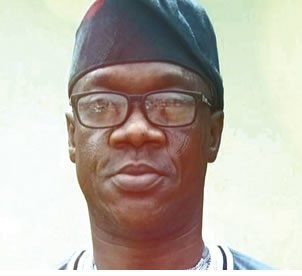
By Suyi Ayodele
At the funeral service for late Chief Adekunle Ajasin on Saturday, November 15, 1997, this is what the late Primate of the Anglican Communion, Abiodun Adetiloye, said about Nigeria and its leaders. The fiery Anglican priest told those who gathered to honour the former governor of old Ondo State, at Saint Andrew’s Cathedral Anglican Church, Owo, venue of the funeral rites, why, despite the natural resources God blessed Nigeria with, the people live in abject poverty. In the congregation on that fateful day was the equally now late General Oladipo Diya, who was then the Second-in-Command to the expired tyrant, General Sani Abacha. Adetiloye said while other nations with less mineral resources protested to God for being partial to Nigeria by depositing several natural resources in the country, God told the placard-carrying nations to calm down and wait to see the type of leaders He would appoint to Nigeria to manage all the resources deposited in the land. The Anglican Primate saw our present conditions years ago. He asked everyone to look around and do personal assessment of how well their leaders had managed those resources in view of the abject poverty traversing the country in a three-piece suit. That sermon was preached 26 years ago. Adetiloye told those who gathered to listen to him, that God gave Nigeria locusts as leaders to manage its resources. Locusts do no other business; they simply waste every vegetation they invade. So, it has been for Nigeria. If you are not too comfortable with this fact by the late Prelate, just take a look around your neighbourhood and tell your next-door neighbour what you see.
The Nigerian lethargic leadership has made the jobs of religious leaders simple. With the present conditions of the Nigerian masses, pastors and imams alike don’t have to stress themselves asking their congregants to live right to avoid what the Christians call Hell, and their Muslim counterparts refer to as Mashiu Nari (مأواه الجهنم او مثواه النار). I don’t think anyone who lives in present-day Nigeria, who goes through the pains that are visited on the people, will still desire to be somewhere else worse than this place. You may not like the sound of it: Hell, or Mashiu Nari is here with us!
Mr. Peter Gregory Obi, the Labour Party (LP) presidential candidate in the 2023 presidential election was in Benin last Thursday for a colloquium held in honour of the national chairman of LP, Mr. Julius Abure. In his goodwill message at the event, Obi reaffirmed what Primate Adetiloye said over two and half decades ago. The former governor of Anambra State noted that with the natural and human resources Nigeria is blessed with, the nation had no reason to be poor. He went ahead to say that while he never claimed to be a Saint himself, he boasted that he had not been found doing the wrong thing. Then he dropped the clincher. As much as God was generous to Nigeria in terms of human and natural resources, the Creator did not give the country good leaders, he quipped. Here is how he put it: “All resources,l anybody, there is nothing wrong with Nigeria; Nigeria has one of the best in terms of land, weather, God-given resources and the people. One thing God has not given Nigeria is good leaders; if we have good leaders, we would do better. A country like Nigeria has no reason to be poor if not because of leadership….” Obi appeared, at that event, to understand where our problem lies. He blamed the politicians for our woes. Hear him again: “The reason why the country is failing today is lack of plan; and when you talk about lack of planning, you are talking about lack of implementation because we politicians, when we are campaigning, everything is sweet and good. But once we have the opportunity, we would bring out our true side and start doing the opposite and reserve our pride for implementation.” Nothing could have been more truthful!
FROM THE AUTHOR: OPINION: It Is Finished
Sir Wilson Leonard Spencer Churchill was the United Kingdom (UK), Prime Minister twice from 1940 to 1945, and 1951 to 1955. His leadership qualities, especially how he managed the post-second world war UK, remain a reference point till date. His numerous speeches on quality leadership and good governance are seminar papers for students of social sciences. Speaking of the great leader, an American writer, speaker and businessman, James Strock, in a November 29, 2022, article titled: “10 Winston Churchill Leadership Lessons”, says: “There is an ultimate test of leadership: would events have turned out differently but for their service? Churchill is one of the rare leaders of history who undoubtedly passes this demanding test. The history of England, the history of Europe—indeed, the history of the world, would have turned out differently but for his individual contribution of service in 1940-41.” Not yet done, quoting Geoffrey Best, who Strock describes as “one of Churchill’s most effective recent biographers”, the American writer pens these words again of Churchill: “By the time Churchill died, Britain was fast turning into a land in which such a man as he was could never again find room to flourish, with a popular culture increasingly inimical to his values and likely therefore not to notice or properly appreciate his achievements….In the years 1940 and 1941 he was indeed the savior of the nation. His achievements, taken all in all, justify his title to be known as the greatest Englishman of his age…” He added a caveat thus: “That is not to say he was always right. He could be disastrously wrong and wrong-headed”, but everything put together, Churchill remains the best the UK ever had. This opinion is reinforced by the popular Cambridge scholar, Sir Geoffrey Elton, who says of Churchill thus: “There are times when I incline to judge all historians by their opinion of Winston Churchill—whether they can see that no matter how much better the details, often damaging, of man and career become known, he still remains, quite simply, a great man.” Adetiloye, titled his referenced sermon “Teach Us to Number Our Days”, taken from Psalm 90:12. On Pa Ajasin’s tomb at the Saint Matthew’s Cathedral Anglican Church, Owo, is written this epitaph: “Blessed are the dead which die in the Lord from henceforth: Yea, saith the Spirit, that they may rest from their labours; and their works do follow them (Rev 14:13)”. Do our leaders really care about what people will say about them after they are long gone? Do they give a thought to what my people call Àtubòtán (Hereafter)?
There is no argument about the fact that acquiescence and docility on the part of the followers are parts of our problems as a nation. Obi also pointed this out in his Benin engagement when he intoned that while the locust leadership stole and wasted public funds, the masses “celebrate them”. But the greatest problem, in my opinion, is the insensitivity of our leaders. The type of people that we have had and still have in positions of authority in this nation, especially from 1999, when the present ‘democratic’ dispensation began, are too unfeeling; they are simply far removed from the pains of the people. The last two or three weeks have been very troubling for Nigeria that one begins to ask if we have effigies at the top of our affairs. While we are still debating the insensitivity of members of the National Assembly who are acquiring Sports Utility Vehicles (SUVs), worth N168m each as their official cars, because, as they argued, “our roads are bad; and not motorable”, another one was dropped on us by the Executive arm, which submitted a supplementary budget of N2.176 trillion to the National Assembly for approval, without a single line item on the list having anything to do with how to ameliorate the harsh economic condition of the poor people, or to build any of our moribund or decaying public utilities. All the supplementary budget, presented less than 60 days to the end of the year, contains items that have to do with the personal comfort of the president, the vice president, and the wife of the president. How will any rational mind justify a budget of N4 billion apiece for the renovation of Dodan Barracks, Lagos official residences of the President and Vice President? How much will it cost to build new official residences for the duo, if indeed, that is our priority at this moment? What exactly will the president and the Vice President be doing in Lagos such that they must be quartered in buildings “renovated” at the cost of N8 billion naira? President Bola Ahmed Tinubu’s residence in Ikoyi is less than 10 minutes’ drive to Dodan Barracks. Are we saying if he has any business to stay in Lagos for a day or two, his Bourdillon Street mansion is no longer befitting? Where, for instance, will he retire to after his tour of duty as president? Is it just the case of what my Ekiti people call “Àdá aládã poo lòra igi” (it is another man’s cutlass that is used anyhow to cut any tree).
FROM THE AUTHOR: Gumi: Nigeria’s Untouchable Sheikh [OPINION]
The nation’s economy is gasping for breath with the oxygen running out, faster than we can imagine. The economists in and out of the government told us that only Direct Foreign Investment (DFI) could bail us out. We did not question their submissions. But tell me, which foreign investor would put his resources in an economy, where the first budget the DFI-infested government would present is one which allocated a whopping N1.5 billion to buy official cars for the president’s wife? Just last week, like common japeries, wives of former and current governors gathered in Ibadan, Oyo State, for what they termed: “First Ladies Against Cancer”. I asked, like the Cross River State correspondent of Daily Trust, Charles Eyo, once asked Chief Femi Fani-Kayode: who bankrolled the Ibadan junket? How much of Oyo State Government funds were expended on the hosting of the “First Ladies”? What about the other ‘First Ladies’ who attended the event with their aides, who paid for them? What is the relevance of governors, or president’s wives to the day-to-day running of the government? We had a national disaster on April 14, 2014, with the mass abduction of our daughters in their school in Chibok, Borno State, and what did we get as the immediate reaction of the leader we elected to protect us? Mrs. Patience Jonathan, the wife of President Goodluck Ebele Jonathan (GEJ), was the one who summoned the parents and teachers of the abducted girls to Aso Rock Villa, where she made her risible “Daris God ooo”, remarks! What is the use of N1.5 billion cars for the wife of the president, when Nigerians are stranded at bus stops waiting for non-existing public transport? Did Nigerians elect the president and their governors alongside their wives such that separate offices are created for them at the expense of our common patrimony? So, a sensible foreign investor reading all the charades would still bring his funds to be eaten up by locusts?
A friend sent to me some videos of a retired Naval officer, Commodore Kunle Olawunmi, who, while explaining the desirability of the N5 billion presidential Yacht included in the supplementary budget, said that the yacht was meant for the president to inspect the nation’s Navy’s war fleet known in military parlance as “Flag showing, or Fleet Review”, a ceremonial parade of the Navy’s war ships arsenal. Good enough, the retired military man, who is now into academics, expressed misgivings about the newness of the yacht, and its actual cost, which he said might be just a fifth of the budgeted cost. On a personal note, I don’t have any problem with the president having a presidential yacht as it is the practice in other countries. My issue with this one is the timing. Is this what we need now? What is the use of our president inspecting the warships on the fleet of our Navy from a N5 billion yacht, when the same Navy has not been able to halt the daily theft of our crude oil from the high sea? Were there no Navy and its fleet of warships when a vessel siphoned our crude, sailed off, undetected, only to be apprehended in faraway Equatorial Guinea, which does not boast of one tenth of the fleet of our Navy? How about the pirates who torment seafarers unchecked by the ‘war ship’ that the navy would want to showcase at a “Fleet Review”? At this period of our economic woes, which is more desirable between a ceremonial presidential yacht and naval equipment that would make the monitoring of our international waters seamless for our military? The one they labelled “clueless”, GEJ, as reported by Daily Trust newspapers in its June 30, 2010, edition, received a proposal for a N3.3 billion presidential yacht by the Navy, and he shot it down by the stroke of his pen! Who inserted that item into the supplementary budget? Who vetted the budget before it was sent to the National Assembly? Why has no head rolled for causing the president such an embarrassment such that his government had to explain? While those who should know have given us the definition of what a presidential yacht is and that is the practice all over the world, the Presidency came up with its usual slatternly explanation that calling the N5 billion yacht “Presidential Yacht” is a mischaracterisation. One wonders why it is difficult for the president’s aides to come to terms with the fact that the issue with the yacht is not about its desirability or ownership, but the wrong timing of either the Navy or the Presidency purchasing the yacht. To add to the insult, one of the key figures in the government, Senator Ali Ndume, the Senate Chief whip, announced on a live television programme that the yacht had been purchased, and delivered, but only to be paid for! Can anyone beat that! Pray, which company, and which country, released a N5 billion ship to an insolvent economy like Nigeria’s? When will those in power accept that the Nigerian people have some level of intelligence? When will our leaders at all levels of governance start to write their names in gold? When exactly will they begin to number their days to acknowledge the vanity of their whims and profligate desires?



News
Edo Targets 2.2 Million Children For Measles, Rubella Vaccination

The Edo State Government says it is targeting about 2.2 million children aged between 0 and 14 years for measles and rubella vaccination across the state.
The Director of Disease Control and Immunization at the Edo State Primary Health Care Development Agency, Dr. Eseigbe Efeomon, who disclosed this during stakeholders’ sensitisation meeting in Benin City, said this would be done in collaboration with development partners.
Efeomon, while noting that the vaccination exercise scheduled to hold simultaneously from January 20 to January 30, 2026, across the 18 local government areas of Edo State at designated health facilities and temporary vaccination posts, said the campaign aims to contribute significantly to the reduction of measles and rubella in Nigeria.
He explained that achieving this target requires increased population immunity through sustained vaccination.
READ ALSO:Man Arrested In Edo For Alleged Abduction Of 4-year-old
Dr. Efeomon stressed that only qualified and certified health workers would be recruited as vaccinators because the vaccines are injectable.
According to him, the vaccination strategy would involve fixed posts and temporary fixed posts, and vaccination cards would be issued to all vaccinated children as proof, which parents and caregivers are advised to keep for future reference.
He added that vaccination teams would visit schools, churches, mosques, markets, motor parks, internally displaced persons’ camps and other public places, while children who receive the vaccine would be finger-marked to prevent double vaccination.
He reiterated that the overarching goal of the campaign is to drastically reduce rubella incidence nationwide and protect children from preventable diseases through effective immunisation coverage.
READ ALSO:Edo widow-lawyer Diabolically Blinded Over Contract Seeks Okpebholo’s Intervention
Also speaking, the World Health Organization Local Government Facilitator, Mr. Ajaero Paul, described measles and rubella as major causes of death and congenital abnormalities among children globally.
He said both diseases are preventable through the measles-rubella vaccine, which he described as safe and effective,
He added that sustained advocacy is critical to reducing child mortality and lifelong disabilities.
On his part, UNICEF Social and Behavioural Change Health Officer, Yakubu Suleiman, emphasised that the measles-rubella vaccine is safe and effective for all children aged nine months to 14 years.
READ ALSO:Edo: Suspected Kidnappers Kill Victim, Hold On To Elder Brother
He stated that the government has fully paid for the vaccines, making them available at no cost to all eligible children in government health facilities across the state.
Suleiman explained that vaccination not only protects individual children but also safeguards communities from deadly vaccine-preventable diseases such as measles and rubella.
He added that even children who had previously received the measles vaccine should still be given the measles-rubella vaccine and appealed to schools and other key stakeholders to support the campaign to ensure that no child is left behind.
News
Togo, Niger, Benin Owe Nigeria Over $17.8m For Supplied Electricity – NERC

Nigeria’s electricity regulator has disclosed that three neighbouring countries, Togo, Niger and Benin, are indebted to Nigeria to the tune of $17.8 million, equivalent to more than N25 billion at prevailing exchange rates, for power supplied under bilateral electricity agreements.
The Nigerian Electricity Regulatory Commission, NERC, made this known in its Third Quarter 2025 report, which reviewed market performance within the Nigerian Electricity Supply Industry, NESI.
According to the report, the international customers were billed a total of $18.69 million by the Market Operator for electricity supplied during the third quarter of 2025. However, only $7.125 million was paid, leaving an unpaid balance of $11.56 million for the period under review.
NERC also revealed that the same international offtakers had outstanding legacy debts amounting to $14.7 million from previous quarters. Of this amount, $7.84 million was settled, leaving a residual balance of $6.23 million.
READ ALSO:Expert Identify Foods That Increase Hypertension Medication’s Effectiveness
When combined with the Q3 2025 shortfall, the total outstanding debt stood at $17.8 million, which translates to about N25.36 billion at an exchange rate of N1,425 to one US dollar.
The regulator identified the international electricity customers as Compagnie Énergie Électrique du Togo, Société Béninoise d’Énergie Électrique of Benin Republic, and Société Nigérienne d’Électricité of Niger Republic.
NERC stated that the three utilities collectively paid just $7.125 million against the $18.69 million invoice issued for electricity supplied in the third quarter, resulting in a remittance performance of 38.09 per cent.
This meant that more than half of the billed amount remained unpaid at the close of the quarter.
READ ALSO:Electricity Workers Threatens Shutdown Over Staff Brutality
The commission explained that the electricity exported to the three countries was generated by grid-connected Nigerian generation companies and delivered through cross-border bilateral power supply arrangements.
By contrast, NERC reported a stronger payment performance among domestic bilateral customers. According to the report, local customers paid N3.19 billion out of the N3.64 billion invoiced for the same quarter, representing a remittance rate of 87.61 per cent.
The regulator further noted that some bilateral customers, both international and domestic, made additional payments to offset outstanding invoices from earlier quarters.
READ ALSO:Reps Ask NERC, DISCOs To Reverse Band A Tariff Hike
Specifically, the Market Operator received $7.84 million from international customers and N1.3 billion from domestic customers in settlement of previous obligations.
Beyond bilateral transactions, NERC disclosed that Nigeria’s 11 electricity distribution companies remitted a total of N381.29 billion to the Nigerian Bulk Electricity Trading Plc and the Market Operator in the third quarter of 2025. This was out of a cumulative invoice of N400.48 billion, translating to an overall remittance performance of 95.21 per cent.
The commission said the figures were derived from reconciled market settlement data submitted as of December 18, 2025, as part of its statutory evaluation of the commercial health and performance of the electricity market.
News
Expert Identify Foods That Increase Hypertension Medication’s Effectiveness

Hypertension remains one of the leading causes of premature death worldwide, contributing significantly to heart disease, stroke, and kidney failure. Despite the availability of effective antihypertensive drugs, long-term control of high blood pressure is often challenging because of drug resistance, side effects, and poor adherence.
This has fueled growing scientific interest in complementary strategies that can enhance drug efficacy while minimising toxicity. One promising approach is the combination of conventional antihypertensive medications with herbs and spices in many kitchens.
Recent evidence suggests that augmenting modern antihypertensive drugs with foods rich in p-coumaric acid, a naturally occurring phenolic acid, may offer a novel and effective strategy for blood pressure control.
Phenolic compounds, commonly found in fruits, vegetables, whole grains, and legumes, are known for their antioxidant, anti-inflammatory, and blood vessel–protective properties.
READ ALSO:Russia, China Afraid Of US Under My Administration — Trump
In a study, researchers investigated the combined effects of lisinopril, a widely used antihypertensive drugs and p-coumaric acid on hypertension.
They reported in the Comparative Clinical Pathology that p-coumaric acid enhance the antihypertensive action of lisinopril, potentially allowing for improved blood pressure control without increasing drug dosage.
The study used an established animal model in which hypertension was induced in rats through oral administration of L-NAME, a compound known to suppress nitric oxide production and raise blood pressure.
Following the induction of hypertension, the animals were treated for 14 days with p-coumaric acid (at two different doses), lisinopril alone, or a combination of both.
READ ALSO:Man Suffers Hypertension As Daughter, Grand-daughter Disappear For 10 Years
Untreated hypertensive rats showed significantly elevated activities of key enzymes linked to high blood pressure such as ACE, arginase, acetylcholinesterase, and phosphodiesterase-5 along with increased lipid peroxidation, an indicator of oxidative stress. At the same time, levels of nitric oxide, a critical molecule for blood vessel relaxation, were markedly reduced.
By contrast, rats treated with a combination of lisinopril and p-coumaric acid experienced notable improvements. Blood pressure was better controlled; harmful enzyme activities were reduced, oxidative stress declined, and nitric oxide levels increased. These improvements were mirrored in the tissues the heart compared with untreated hypertensive animals.
They said that the findings suggest that p-coumaric acid may enhance the antihypertensive action of lisinopril, potentially allowing for improved blood pressure control without increasing drug dosage.
This drug–food interaction model is particularly important in the circumstance of long-term hypertension management. Many patients rely on lifelong medication, and strategies that can improve treatment outcomes while reducing side effects are highly desirable.
READ ALSO:Delta Unveils Free Hypertension, Diabetes Screening
The study also reinforces the growing recognition that diet is not merely supportive but can be biologically active in disease control.
The use of medicinal plants and plant-based therapies in the management of hypertension is deeply rooted in traditional medicine across many cultures. While such practices have often existed outside conventional healthcare systems, modern scientific research is now providing evidence-based explanations for their effectiveness.
While these findings are based on animal studies and cannot yet be directly translated into clinical recommendations for humans, they open the door to future research on dietary strategies that can safely complement antihypertensive drugs.
READ ALSO:Why West African Troops Overturned Benin’s Coup But Watched Others Pass
Further clinical studies are needed to determine appropriate dosages, safety profiles, and real-world effectiveness.
In the fight against hypertension, the future may lie not only in new drugs, but also in smarter combinations, where medicine and nutrition work together to deliver better, safer outcomes for patients.
Such nutrition to help maintain healthy blood pressure includes garlic, potatoes, walnuts,tomato and tomato products, legumes and citrus fruits (grapefruits and oranges).
(TRIBUNE)

 News4 days ago
What I Saw After A Lady Undressed Herself — Pastor Adeboye
- Headline5 days ago
PROPHECY: Primate Ayodele Reveals Trump’s Plot Against Tinubu
- Metro4 days ago
Armed Robbers Shot PoS Operator To Death In Edo
- Business3 days ago
NNPCL Reduces Fuel Price Again
- Metro3 days ago
AAU Disowns Students Over Protest
- Metro5 days ago
Joint Task Force Kills 23 Bandits Fleeing Kano After Attacks
- Politics5 days ago
2027: Rivers APC Pledges To Follow Wike’s Instructions
- Metro3 days ago
Edo: Suspected Kidnappers Kill Victim, Hold On To Elder Brother
- Metro3 days ago
Nine Soldiers Feared Dead In Borno IED Explosion
- Headline2 days ago
Russia Deploys Navy To Guard Venezuelan Oil Tanker Chased By US In Atlantic


