
News
OPINION: The Girls Of Chibok, Maga, Papiri And Our Frankenstein

By Festus Adedayo
Famous Ogbomoso, Oyo State-born bard, Foyanmu Ogundare, had some words for evil spins and spinners. Religionists call these spinners “workers of iniquity”. They are a legion in Nigerian politics. Ogundare popularised this genre of oral poetry called Ìjálá Ọdẹ, traditionally chanted by hunters and warriors. Though a special verbal art of worshipers of Ogun, the Yoruba god of iron and war, Ìjálá is sung by hunters most times at their leisure, upon return from hunting expeditions. In an Ijala chant which he entitled Òré Òdàlè – Betrayer – Foyanmu chanted: “While the liar dies and his legs are buried in a sprinkle of ashes; the evil one, at death, has his legs laid inside hot charcoal, the legs of the righteous, at death, are stretched inside a coffin made of brass.” The bard rendered the poetry thus in Yoruba: “Purópuról’ókús’ójúeérú o/Sìkàsìkàkú, ò nasès’áàrò/Sòótó-sòótó nìkan l’óku sí’núpósí ide.” In this particular poetry, Foyanmu compared evil-doers to “alágàbàgebè” – hypocrites. They are deft and adept at killing and burying their victims, away from the gaze of the world. He, however, reminded them that when they have successfully killed and safely buried their victims, God alone is one who could take the evil shovel off their hands and unbowel their dark secrets. You will see Foyanmu’s poetry in action in Sayo Alagbe’s Ijala: Ogundare Foyanmu (2006).
On the night of April 14, 2014, rumour took over the Nigerian space. On that night, as Islamic jihadists’ trucks and buses forcibly conveying abducted 276 girls from Chibok, Borno State, disappeared into the Sambisa forest, a scary rumour whooshed in the Nigerian air. The girls were aged 16 to 18 and students of Government Girls Secondary School, Chibok. It brings the question, what is the place of rumour in our everyday society? Nicholas DiFonzo and Prashant Bordia, in their “Rumor, gossip and urban legends” Diogenes (2007) say rumour is an “unverified and instrumentally relevant information statement in circulation”. As such, even with power, majesty and Intel reports at his disposal, as the Jihadists ferried the girls into Sambisa, President Goodluck Jonathan chose to queue behind “rumour” as an instrumentally relevant information. Rumour then assumed the place of fact.
But, what was the rumour of Chibok? That the abducted schoolgirls, mostly Christians and a sprinkle Muslims, were instruments in the hands of Nigerian politicians. But, how? When? Why?
While the All Progressives Congress (APC) was seeking to meander its way into Aso Rock in 2014, it was caught in the web of that rumour. Before anyone could stand in its way, the rumour had spiralled in like a typhoon. Even the maishai hawking hot tea by the sidewalks was sold the hot rumour. It was retailed on every outlet. Deft politicians of the APC were said to have woven the plot like a spider weaves its gossamer. Having brilliantly pelted the sour grape of “lacklustre” and “clueless” on Jonathan, “ineptitude” would finally ram in the last nail on his government’s coffin. America would buy it and APC would coast home to power. The rumour goes thus: enlisting local militants to siphon the girls out of Chibok was a top-notch political masterplan to tar-brush Jonathan. It has been said that the global outrage the Chibok abduction courted, with Barack Obama and his wife becoming willing recruits of the agenda, incinerated Jonathan. Its effect was so massive that, when he got to the polls in 2015, Jonathan was as worthless as a roll of tissue paper. For a very long time, a Big Man in the APC, said to have been handed the job of ferrying those girls out of Chibok, was never in good terms with Jonathan. Now, payday is here.
MORE FROM THE AUTHOR:OPINION: Aso Rock And Kitoye Ajasa’s Lickspittle Press
Fast-forward to last week. When their projection hits the bull’s eye, Yoruba say, the Babalawo had hardly unpacked his Ifa divination tablet, also known as an OpónIfá, than physical affirmation of his prophecy came to pass. DiFonzo and Bordia’s rumour definition again perched on us like a recalcitrant vulture on carcass. Events of last week earned the epaulette to be saluted as Nigeria’s most harrowing week. Gory occurrences happened in less than 24 hours span from one another. They were followed by high-quality rumours which traveled at the speed of light, bearing cadences of truth. Nigeria’s recent insecurity nightmares, the rumours say, are pay-day for persons in this government who, eleven years ago, gathered to cook a broth of lies with faggots of untruth.
If you saw last week’s viral video of worshipers at a branch of the Christ Apostolic Church (CAC) Eruku in Kwara State, the picture you would get is a prostrate Nigeria, on its knees. When you add that sobering picture to last Tuesday’s story of armed Islamic terrorists’ killing of a vice principal, abducting at least 25 students of Government Girls’ Comprehensive Secondary School, Maga, Kebbi State, as well as the killing of a Nigerian Brigadier-General by ISWAP terrorists, the picture becomes complete. The week was almost ending when another horror occurred. Three hundred and fifteen students of St. Mary’s Catholic Secondary and Primary School, Papiri, Niger State were abducted. So huge is the terror that, in panic, government shut all the 47 unity colleges.
When you dig a trench to bury your enemy, folk wisdom counsels that you dig it as shallow as possible. The nugget of the counsel is that, that same trench may well be your sepulcher. In the wake of the week of palpable agony that was unleashed on Nigeria last week, the Jonathan narrative returned to Nigerian public discourse. It is the narrative of a Nigeria being run by a government that is clueless in taming the shrew of insecurity, but heavy in propaganda. The Obamas have now been replaced by Donald Trump, Ted Cruz and co. as taunters of those who dug Jonathan’s grave. Evil has turned full circle.
The Eruku church invasion has preyed on the subconscious of the world ever since. Its preying comes with terrifying and terrorising images.
MORE FROM THE AUTHOR:[OPINION] Trump: Kurunmi’s Lessons For Tinubu
And then, the bandits stormed the church of God. Sporadic gunshots exploded. It was as if Eruku was Kyiv. When they eventually stepped their blood-stained feet on God’s sacred groove, the mainstreaming cameras caught the innermost recess of their hearts. It was thirsty for the blood of worshipers. Their physiognomy was unmistakable. It was that of our national tormentors, the Fula ethnic group, otherwise called Fulani. Dispersed across the Sahara, Sahel, West Africa and northern parts of Central Africa, South Sudan, Darfur and regions near the Red Sea coast in Sudan, this ethnic group has a sacred bonding that goes beyond the surreal.
In Nigeria, they are at the pinnacle of power. One of their topmost bloodlines in government today is Nigeria’s National Security Adviser, Nuhu Ribadu. So also, was Muhammadu Buhari, who was once quoted to have said in 2013 that “the military offensive against Boko Haram is anti-North”. Former Kaduna State governor, Nasir El-Rufai, was also openly supportive of Fulani terror. In a viral video which had him crying and asking for retaliation, Isa Pantami, Nigeria’s erstwhile Minister of Communications, cried that there were retaliatory attacks against insurgents. In another sermon, Pantami called Boko Haram Islamic Jihadists “our Muslim brothers” who were being massacred “like pigs” rather than being accorded the privileges of Niger Delta militants. Under the Muhammadu Buhari presidency, a top official of that government shocked Nigerians when he said the Fula of countries in Africa had the “inalienable rights” to ingress into and egress out of Nigeria. They didn’t need Visas.
Last Tuesday, the Fula tormentors, cuddling menacing rifles like a mother cuddles her newborn, stormed Eruku. They stomped in like an army of occupation. Inhabitants said they got prior Intel of their invasion which they shared with security agencies. The question is, would Fula top chiefs manning Nigerian security hurt their bloodline to appease Eruku ‘infidels’?
So, they struck. Viral videos of their clinical operation showed about five armed bandits. They must have muttered “Allahu akbar” as they killed. Kwara State has confirmed that 38 worshipers, which included the pastor and congregants, were equally rounded up and marched into the forest. But, judging by its contiguity to the southwest, does Tinubu know that the next place to walk into for the Fulani terrorists of Eruku is Yorubaland?
MORE FROM THE AUTHOR:OPINION: Abulu, The Prophetic Madman, At Akure Summit
Twenty four hours before, the terrorists found encore in Maga. Around 4a.m. on Monday, they struck this sleepy town in Kebbi State. It was the Government Girls’ Comprehensive Secondary School, Maga, in Danko/Wasagu Local Government Area that they chose. Maga brings fond memories of Kebbi State to me. Thirty two years ago, I saw caravans of traders, travelling on their mules galloping across the deserts through Yelwa-Yauri, Koko-Besse, Zuru, Suru, Jega, down to Argungu. Maga existed for us in conversations. Carrion-hungry ravens would seem to have polluted the unvarnished peace of Kebbi. When they concluded their pre-dawn raid of terror, 25 students were matched into the bush while the vice principal and a security guard were said to have been shot dead. In an interview, Malama Amina, wife of the slain vice principal, said the Jihadists, who dressed in army camouflage, spoke fluent Fulfude.
If you follow the unleashing of terror on the Nigerian space this past week, its abnormality would strike you firsthand. Was there a choreographed attempt to foist the narrative of an inept leadership? Or Christian persecution? The incongruities are manifest. One is that, kidnap of school students, since Chibok, would seem to have receded. Why is it resurgence now? Second is that, the inundation of the country with about four terrorist attacks in one week cannot be a happenstance. Piling the horrors into one single week raises a red flag of suspicion. At a time when America is firing its tempers at Tinubu from all cylinders, even an incompetent military analyst would confirm that this fusillade of attacks is not organic. In the manner of a recent lingo curated in Ibadan, Oyo State, that went viral, it looks like some persons, sitting somewhere, have chosen to cure past madness or even recent ones, with madness.
The upsurge of violence in Nigeria by Islamic fundamentalists looks like what Yoruba would refer to as egbìnrìn òtè. It is a complex and endless web of plots, intrigues and conspiracies. In this roller-coaster of intrigues, any attempt to find solution to one plot leads to more plots surfacing. It is comparable to a recurring infestation of disease.
To douse the fire of egbìnrìn òtè requires tact. Nigeria must do three things to wean this repeated violent blood-let off it. First, we must find out what the ideology of Boko Haram and other Islamists is. It is only when we know what makes them tick that we can find solutions to the insurgents’ irritancy. It is apparent that the “book is Haram” philosophy credited to the insurgents’ spiritual leader, Mohammed Yusuff, is no longer the Jihadists’ current ideology. Is the ideology a Fulanization agenda? Is it Islamic? Is it ethnic? These questions become necessary because there is so much Fulanization wrapped round the Boko Haram insurgency which makes prising them apart difficult. Second, in trying to tame this Frankenstein’s monster of insurgency and banditry, the Tinubu government must come clean with itself, just as it must be ready to clean the Augean stable.
For so long, Nigeria has accommodated seeds of destruction within itself like the proverbial foetuses within the gaboon viper, (Oka) which my people believe will eventually kill the snake. In Nigeria’s week of terror, security forces were fingered as enabling the insurgents. Government must clearly identify military barons and their civilian accomplices who see insurgency as business, religion or tribe. Upon identification, it must go after them with the venom of the western taipan, a species of extremely venomous snake of central east Australia origin. Saboteurs are a legion at the apex of power and are agents of the multiplication of the seeds of insurgency in Nigeria. It was this crack that Donald Trump entered in performing his “disgraceful country” showmanship. If Tinubu will, this hour, de-emphasise the politics of 2027 and embrace country, we will not have to repeat this orgy of bloodshed and kidnapping of our children.



News
NAF Launches Attack On Terrorists In Borno
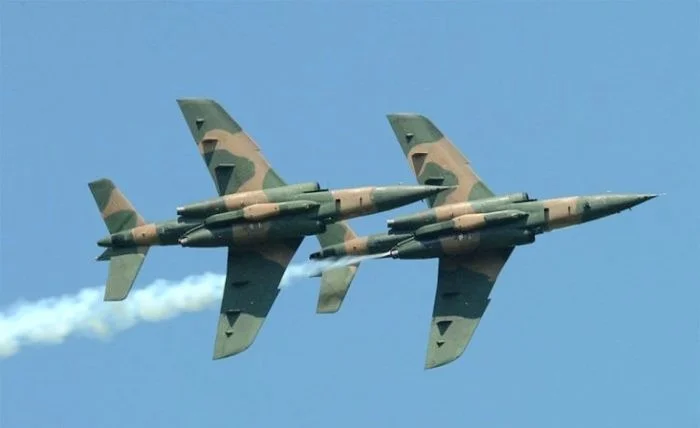
The Nigerian Air Force, NAF, operating as part of the joint task force of Operation Hadin Kai, has carried out a coordinated air interdiction at AbbagaJiri in the Timbuktu Triangle, Borno State.
According to Air Commodore Ehimen Ejodame, Director of Public Relations and Information of NAF, the air strikes successfully paved the way for ground troops.
He explained that the operation was based on actionable intelligence from multiple sources, which confirmed the presence of terrorists, their structures, and concealed logistics facilities in the area.
Ejodame stated that NAF air assets were deployed in integrated surveillance and precision strike roles to target identified threats.
READ ALSO:NAF Hits Bandit Logistics Hub, Neutralises Many In Zamfara
The operation aimed to degrade terrorist capabilities, deny them sanctuary, and shape the battlefield for ground forces, all while strictly adhering to rules of engagement and protecting civilians.
He added, “The Identified terrorist structures were decisively engaged and destroyed, denying the terrorists freedom of action, while a follow-up engagement neutralised armed elements observed converging on the location.”
“Subsequent advances by ground troops into the area confirmed the effectiveness of the air strikes and validated the success of the joint air–land operation.”
Speaking on the mission, Chief of the Air Staff (CAS), Air Marshal Sunday Aneke, said, “The success of the mission reflects the NAF’s resolve to dominate the air domain in support of joint operations.”
READ ALSO:NAF Hits Bandit Logistics Hub, Neutralises Many In Zamfara
Aneke further emphasized that the operation highlighted the service’s commitment to providing precise and decisive air power in support of ground forces.
In his words, “We will continue to deny terrorists freedom of movement, sanctuary, and logistics wherever they seek to hide. Air operations will remain relentless and intelligence-driven.”
“Our operations are carefully planned and intelligence-led, ensuring maximum effect on hostile elements while safeguarding innocent civilians.”
READ ALSO:NAF Announces Two-hour Road Closure In Abuja For 10km Walk
“The Nigerian Air Force will sustain pressure until terrorist networks are completely dismantled.”
He further noted that the operation showcased NAF’s aggressive stance, precision employment of airpower, and dedication to sustained joint operations.
Aneke added that such missions play a crucial role in enabling ground troops to maintain momentum and deliver decisive outcomes against terrorist networks threatening lives, property, and Nigeria’s national security.
News
Lagos Parks To Close For Maintenance – State Govt
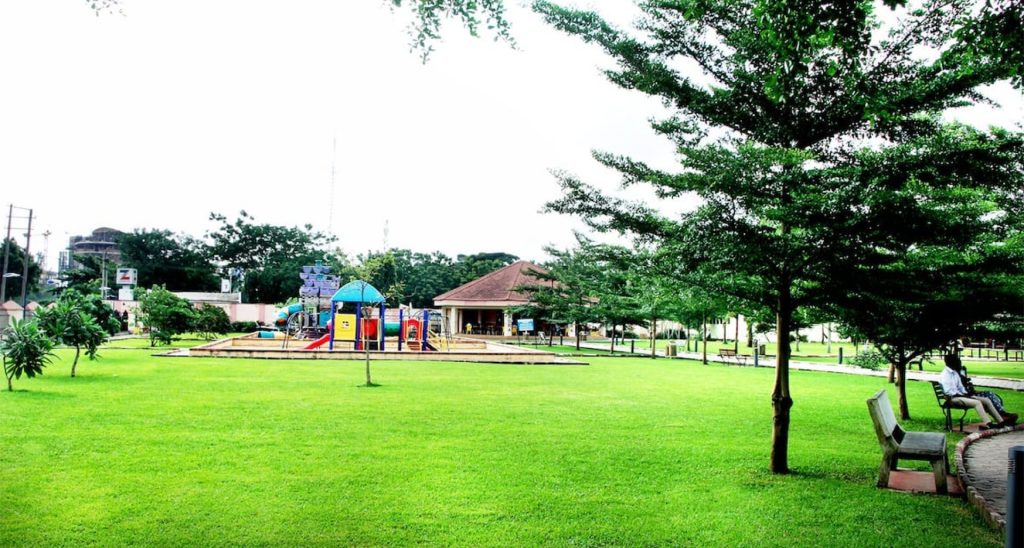
The Lagos State Parks and Gardens Agency, LASPARK, has announced that all public parks under its management across the state will be temporarily closed for routine maintenance and upgrades.
In a statement released on January 9 and shared via its official platforms early Saturday, LASPARK said, “All parks under our management will be closed to the public from January 12 to January 31, 2026.
“This follows increased visitor activity during the recent festive season.”
The agency listed several popular recreational spots that will be affected, including “Ndubisi Kanu Park, Alausa JJT Park, Dr. Finnih Abayomi Park in Oregun, and all other LASPARK-managed parks across Lagos State.”
READ ALSO:
Explaining the reason for the closure, LASPARK added, “The temporary shutdown is necessary to carry out essential landscaping, facility repairs, and general upgrades to ensure that our parks remain safe, clean, and enjoyable for residents and visitors.”
The agency also stressed that the exercise aligns with its broader mandate, noting, “This maintenance programme is part of our commitment to providing well-maintained green spaces that promote relaxation, wellness, and environmental sustainability.”
LASPARK assured residents that “all parks will reopen at the end of the maintenance period.”
News
PAP Sends Additional 34 Foreign Post-graduate Scholarship Beneficiaries To UK Varsities

The Presidential Amnesty Programme (PAP) has deployed an additional 34 foreign post-graduate scholarship beneficiaries to various universities in the United Kingdom for the 2025-2026 academic year.
This was contained in a statement made available to newsmen in Warri by Mr Igoniko Oduma, Special Assistant on Media to Dr. Dennis Otuaro, the Administrator, PAP.
According to the statement, the scholars’ programmes include data science, fintech analytics, cyber security, international energy law and policy, construction project management, public health, agri-food technology, electrical and petroleum engineering, among others.
The statement added that more foreign post-graduate scholars will be sent to UK universities in the current academic session.
“In December 2025, nine students, who were the first set of offshore post-graduate scholarship developments by the PAP Administrator, Dr Dennis Otuaro, for the 2024-2025 academic year, graduated from their various programmes in UK universities.
READ ALSO:PAP Scholarship Scheme Vehicle For Better Future For Niger Delta —Otuaro
“Otuaro has deployed over 9000 students to universities within and outside Nigeria for different industry-relevant programmes since he assumed office in March 2024,” the statement partly reads.
Speaking at the pre-departure orientation programme for the scholars at the PAP headquarters in Abuja, on Thursday, Otuaro said that the large-scale deployment was aimed at making the Niger Delta a knowledge-driven region.
He said that his leadership reinvigorated the programme to give it a new momentum in service delivery to the people of the region based on the mandate of President Bola Tinubu.
Otuaro said, “We are sending all of you for post-graduate studies in various universities in the United Kingdom.
“The PAP now has a new momentum and direction because of the repositioning and broad reforms that we carried out in line with the mandate of His Excellency, President Bola Ahmed Tinubu GCFR.
READ ALSO:Otuaro Tasks Media On Objective Reportage
“The objective behind the huge scholarships deployment is to ensure that we develop the needed human capital to transform the Niger Delta and generate knowledge-wealth.
“We want to develop relevant manpower in critical disciplines for our region and by extension, the country, because you are expected to contribute your quota to national development after successful graduation.”
The PAP boss, who was represented at the event by his Technical Assistant, Mr Edgar Biu, advised the scholars to study hard to achieve academic excellence in their various fields of research.
According to him, the scholars have an obligation to justify the Federal Government’s investment in their education and future.
READ ALSO:I’m Not Distracted By Anti-Niger Delta Elements, Says PAP Boss, Otuaro
He reiterated his warning that beneficiaries should not take for granted the opportunity to further their academic pursuits in the interest of the Niger Delta and indeed the country.
Otuaro expressed appreciation to President Tinubu for his “enormous interest and support for the Programme”, particularly the approval of an upward review of the programme’s budget from N65billion to N150billion.
He also expressed gratitude to the National Security Adviser, Mallam Nuhu Ribadu, for his impeccable guidance and supervision of the programme’s initiatives.
Otuaro, therefore, cautioned the scholars to obey their host country’s laws and the rules and regulations of their various institutions, stressing that they are ambassadors of Nigeria, the Niger Delta and their communities and families.
Highpoint of the orientation programme was the presentation of laptops to the scholars to help them in their studies.

 News5 days ago
How To Calculate Your Taxable Income
- Headline5 days ago
Russia Deploys Navy To Guard Venezuelan Oil Tanker Chased By US In Atlantic
- Metro4 days ago
Edo widow-lawyer Diabolically Blinded Over Contract Seeks Okpebholo’s Intervention
- News4 days ago
Expert Identify Foods That Increase Hypertension Medication’s Effectiveness
- Politics4 days ago
APC Leaders, Tinubu/Shettima Group Call For Wike’s Removal As FCT Minister
- Metro5 days ago
JUST IN: Court Grants Malami, Wife, Son N500m Bail Each
- Entertainment5 days ago
VIDEO: ‘Baba Oko Bournvita,’ Portable Drags His Father, Alleges Bad Parenting, Extortion
- Politics5 days ago
2027: Details Of PDP Leaders, Jonathan’s Meeting Emerge
- Politics3 days ago
Wike A ‘Pestilence’ On Rivers, I Resigned Because Of It – Ex-Commissioner
- Politics3 days ago
Wike: Why Removing Fubara Will Be Difficult – Ex-Commissioner


