
News
OPINION: The President Is Missing
By Suyi Ayodele
I do not claim authorship of the above headline. That credit goes to Bill Clinton, former President of the United States of America (USA), and his co-author, the American novelist, James Patterson, who penned the words as the title of their novel, roundly described as “a political thriller novel”, “The President Is Missing”, published in 2018.
I adopted the title because the thematic preoccupation of the plot, with particular emphasis on the presence of inner enemies within power circles, resonates with the current state of the Nigerian presidency, especially under President Bola Ahmed Tinubu.
One of President Tinubu’s frenemies, Senator Ali Ndume of Borno South Senatorial District, last Friday, alluded to the bad elements in the Presidency who never wished Nigeria or its people well. Ndume suggested that these vipers in the corridor of power, have held Tinubu captive. He said those locusts were responsible for the bad economic policies of the president. He therefore asked the President to do something to ameliorate the pain in the land to avoid the impending disaster.
As much as I don’t trust Ndume or anyone else in his phylum, I think his allusion to bad close allies of the president is a bit plausible. That finds its strength in the saying of our sages that the insect which devours the vegetable lives right on the stems of the vegetable. Leaders, all over the world, are surrounded by terrible allies who engage their principals and feed them with the worst of ideas.
But that does not exculpate the principals. Show me your friends and I will tell you the type of person you are, goes the saying. President Tinubu must be bad himself to have accommodated those “bad advisers” for 17 months! I say this again because the elders of my place submit that a man who is taught bad behaviours and goes ahead to exhibit them must have been congenitally bad himself!
The fictitious President Jonathan Lincoln Duncan of the USA in the referenced novel above has trusted, but bad allies in his cabinet. One of them, and who is responsible for the entire incidents that permeate the episodic novel, “The Missing President”, is no other person than Ducan’s Chief of Staff, Carolyn Brock. How Ducan handles her and any other frenemy within the cabinet is what distinguishes a present president from a missing president. Ndume’s allusion to “bad advisers”, to me, only points to one thing, to wit: in the Nigerian Presidency, the missing link is nothing but a Missing President. I will explain.
MORE FROM THE AUTHOR: Wike, Fubara: Bitten By Tiger Cub [OPINION]
Alhaji Abdulrazak Ganiyu Folorunsho, otherwise known as A.G.F. (1927-2022), was the chairman of the committee that gave Nigeria the current presidential system of government. When General Murtala Mohammed’s military administration conceived the idea of a return to democracy, A.G.F. headed the sub-committees of the 1975 Constitution Drafting Committee saddled with the responsibility of determining the modus operandi of the envisaged presidential system of government. It is on record that of all the sub-committees of the Constitution Drafting Committee, only the Ilorin-born lawyer and diplomat’s sub-committee had all its recommendations adopted without changes. The question is, what did the A. G. F’s sub-committee do differently?
In determining how the presidential system would work perfectly for Nigeria, the sub-committee placed a huge premium on the personality of the would-be president. With the precision of a thorough surgeon, the sub-committee defined the personality of who should aspire to be president thus:
“He must perform and be seen as performing the following functions: that of being a symbol of national unity, honour and prestige; being a national figure- a political figure in his own right; and that of being an able executive-someone who can give leadership and a sense of direction to the country”.
This submission entails that there shall be no abdication of responsibilities by the president. No buck-passing and no blame-game. The president must be someone who is ready “to give leadership and a sense of direction to the country”. This is where Ndume’s theory of “bad advisers” to President Tinubu falls short.
The 1975 sub-committee, which is 49 years ago, validates this position when it submitted, alongside other recommendations, that in arriving at the identikit description of the intending president, its decisions “were very much influenced by the debate on national objectives and public accountability…., adding that “What has been uppermost in our minds is how to provide for an effective leadership that expresses our aspirations for national unity without at the same time building up a Leviathan whose power may be difficult to curb.” The whole argument is about leadership and that, unfortunately, has been in short supply in the present administration.
No one expects Mr. President to do it alone. He must, as a matter of necessity, have people he can call upon to do one thing or the other. The difference here, however, is that the buck stops on his table. His personality also counts. Bad advisers or no bad advisers, President Tinubu is the one elected and he takes the blame for his inability to be firm, resolute and consistent. The nation’s economy is dancing to the yoyo percussion because the President has not demonstrated enough understanding of the simplest of governance intricacies.
If President Tinubu has failed in the last 17 months to identify the “bad advisers” in his cabinet, and he keeps listening to them as his voodoo economic policies push Nigerians to the pit of want, lack and abject poverty, he is to be blamed. At his electioneering, Nigerians were assured that Tinubu would assemble the best of “technocrats” and fix the nation. If what we are seeing now is the best that can come out of the ovens of his “best technocrats”, then something is fundamentally wrong! Tinubu therefore carries the can, no argument!
MORE FROM THE AUTHOR: Nigeria @ 64: The One The World Troubles [OPINION]
Our present situation in Nigeria has become like the case of a man whose mother was devoured by a tiger. Our elders say the method to adopt in consoling the bereaved remains a puzzle. They ask: “Do you tell him to take heart because it is the way of tigers to devour human beings? Or do you tell the bereaved that that was how your own mother was devoured?” This is the difficult task before those who sold Tinubu to Nigerians. They need a solid argument to convince the rest of us how the kola nut they sold to us at Ejigbomekun Market suddenly turned to abidan (pseudo kola nut).
Unlike what happened in Clinton and Patterson’s novel, when Ducan deliberately goes ‘missing’ at one of the most crucial times in the history of America, in order to solve the riddle of the bad element in his cabinet, President Tinubu at the moment is holidaying in one of the coolest spaces in the world, doing nothing, at a time Nigerians are gasping for breath because his administration, has, within a month, inflicted pain on them, twice, by increasing the pump price of fuel. One of President Tinubu’s handlers, Bayo Onanuga, the Special Adviser on Information and Strategy, told us, that while on leave, Tinubu could go anywhere he chose.
I have no problem with that, and I will also not join the ‘bandwagon’ of those who think the President should be sensitive enough to show compassion, even if feigned at this period. When a president lacks the qualities the 1975 committee on the presidential system stipulated the way Tinubu does, the President can afford to crisscross the globe at a time Nigerians are dying in pain. In all honesty, I must say this: I may end up being the greatest fan of President Tinubu. A man who acts to type is my friend any day! President Tinubu, I confess here, has not disappointed in turning out to be a tribulation in his Presidency, the way we predicted in 2023 while he was seeking to be president!
MORE FROM THE AUTHOR: OPINION: ‘Protest’ That ‘Restructured’ Nigeriass
I also don’t want to believe that Oga Onanuga is one of the alluded “bad advisers” of the president. Every man gives to the best of his aptitude. I have often heard that morality has no place in Nigerian politics. Only a morally-sound adviser would be able to tell his principal that this is not the time to junket at the expense of the people. What Onanuga failed to tell us is that while on holiday anywhere in the world, President Tinubu pays no bills. Our treasury does that. Tinubu is not just our president; he is equally our burden! Again, we are not at liberty to ask which duty has the president performed in the last 17 months to deserve a leave. A man who has the capacity to inflict this level of pain on us deserves a rest from his ‘hard work’! Phew!
I also think we should not blame Mrs. Oluremi Tinubu, the president’s wife, who, last week, asked us to look in the haystack for the needle for those responsible for our present economic woes. To the First Lady, 17 months is not enough for Nigerians to start asking Tinubu questions about how their nation’s economy has nosedived. It would not matter to her that Nigerians cannot afford the N1,700 loaf of bread as long as she can donate the sum of N1 billion to her alma mater, Obafemi Awolowo University (OAU), Ile-Ife.
How she came about the huge amount of money and the N500 million she earlier dashed the Borno flood victims, should we ask, Mrs. Tinubu is likely to tell us that 17 months is too short a time for Nigerians to think she must have helped herself to a part of our national cake. Afterall, she told us, plainly, that her family was already well-to-do before her husband’s presidency. Even with no known business concern apart from being the wife of Bola Tinubu, Mrs. Tinubu can afford to throw around N1.5 billion in just a month! Only a beneficiary of the Biblical proclamation: “Blessed art thou among women” (Luke 1:42), can achieve that feat!
MORE FROM THE AUTHOR: OPINION: The Streets Are Empty
Writers are ‘bad’ people. They depict characters in very fanciful ways. In depicting an average Nigerian in his novel, “Lonely Londoners”, Sam Selvon, gives Captain, or Cap for short, the portrait of a roué. That identikit fits perfectly typical Nigerian leaders, who, like Cap, do nothing but live on our common patrimony, smoke the best cigarette, drink the most expensive wine and keep the most beautiful ladies as their wives or girlfriends.
Selvon says this of Cap: “It have some men in this world, they don’t do nothing at all, and you feel that they would dead from starvation, but day after day you meeting them and they looking hale, they laughing and they talking as if they have a million dollars, and in truth it look as if they would not only live longer than you but they would dead happier.” So, it is with our leaders who not only live parasitically on our commonwealth but flaunt the same and ask us to go hug the next electric pole!
“They say there’s no manual for overcoming the death of a spouse (110). Ducan again, the fictitious US President, utters those words in the novel cited in our opening paragraph. Nigerians are at that stage of our excruciating pain inflicted on us because we have a President who chooses to be missing in his own Presidency. It is only a missing president that would allow “bad advisers” to take over his government and dish un-squeezed bitter leave portions to the people at regular intervals the way we have in this Tinubu’s administration. The physical presence of the man notwithstanding, President Tinubu is missing in action in his own government.
The allusion to a “missing president” was first thrown at us when the former Secretary to the Government of the Federation (SGF), Babachir Lawal, in October 2017, asked rhetorically: “Who is the Presidency?” Lawal, who was accused of diverting the sum of N544 million meant for cutting grasses at Internally Displaced Persons’ (IDP) camps to his personal company, was asked by a horde of journalists to confirm his suspension as the SGF, after he emerged from the office of the Vice-President, Professor Yemi Osinbajo. Bewildered that the information he shared only with Osinbajo had leaked, Lawal threw the question back at the journalists by asking them who suspended him. When he was told “by the Presidency”, he retorted: “Who is the Presidency?”
The former SGF asked that question because in the administration where he served as the SGF, President Muhammadu Buhari was a “missing president”, a President-do-nothing, at best! And that has been the misfortune of Nigerians in the last nine years. Everything in the administration has been on autopilot because the one elected to lead has abdicated that responsibility. President Tinubu had no mistakes about the tasks before him when he sought to be president. He told whoever cared to listen then that he understood the enormity of the problems and promised to fix them.
He assured the people with his “E lo fokan bale” campaign payoff. On the fuel increase prior to the 2023 general election, Tinubu said “a ma gbe wa le” (we shall reduce it). So, the excuse by Mrs. Tinubu that her husband’s administration just being 17 months old is to say the least, blether! We should ask the mad man who spends 17 months removing his clothes, how many months he has to run around the market naked! For a man they sold to us as cerebral, he has had more than enough time in the last 17 months to fix many of the problems. Ndume said that the time is running out. I add here that we are on borrowed time already!
President Tinubu must change the narrative. What we have now is a situation where the government does not even know what the problems are. Nothing, I dare reiterate, in the last 17 months, shows that President Tinubu has the aptitude for the work he elected to do. If nobody has told the president that, I think we owe him that obligation to tell the President that he is missing in his Presidency! This is what I expect Mrs. Tinubu and the president-can-go-anywhere-he-likes gang to do: find the Missing President and bring him back to his Presidency to fix Nigeria!



News
NAF Launches Attack On Terrorists In Borno
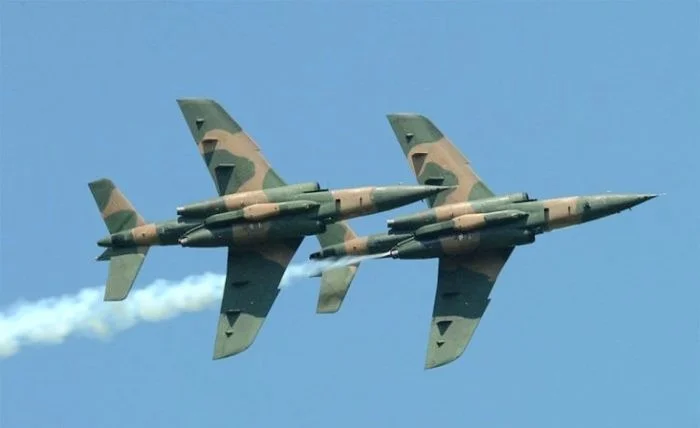
The Nigerian Air Force, NAF, operating as part of the joint task force of Operation Hadin Kai, has carried out a coordinated air interdiction at AbbagaJiri in the Timbuktu Triangle, Borno State.
According to Air Commodore Ehimen Ejodame, Director of Public Relations and Information of NAF, the air strikes successfully paved the way for ground troops.
He explained that the operation was based on actionable intelligence from multiple sources, which confirmed the presence of terrorists, their structures, and concealed logistics facilities in the area.
Ejodame stated that NAF air assets were deployed in integrated surveillance and precision strike roles to target identified threats.
READ ALSO:NAF Hits Bandit Logistics Hub, Neutralises Many In Zamfara
The operation aimed to degrade terrorist capabilities, deny them sanctuary, and shape the battlefield for ground forces, all while strictly adhering to rules of engagement and protecting civilians.
He added, “The Identified terrorist structures were decisively engaged and destroyed, denying the terrorists freedom of action, while a follow-up engagement neutralised armed elements observed converging on the location.”
“Subsequent advances by ground troops into the area confirmed the effectiveness of the air strikes and validated the success of the joint air–land operation.”
Speaking on the mission, Chief of the Air Staff (CAS), Air Marshal Sunday Aneke, said, “The success of the mission reflects the NAF’s resolve to dominate the air domain in support of joint operations.”
READ ALSO:NAF Hits Bandit Logistics Hub, Neutralises Many In Zamfara
Aneke further emphasized that the operation highlighted the service’s commitment to providing precise and decisive air power in support of ground forces.
In his words, “We will continue to deny terrorists freedom of movement, sanctuary, and logistics wherever they seek to hide. Air operations will remain relentless and intelligence-driven.”
“Our operations are carefully planned and intelligence-led, ensuring maximum effect on hostile elements while safeguarding innocent civilians.”
READ ALSO:NAF Announces Two-hour Road Closure In Abuja For 10km Walk
“The Nigerian Air Force will sustain pressure until terrorist networks are completely dismantled.”
He further noted that the operation showcased NAF’s aggressive stance, precision employment of airpower, and dedication to sustained joint operations.
Aneke added that such missions play a crucial role in enabling ground troops to maintain momentum and deliver decisive outcomes against terrorist networks threatening lives, property, and Nigeria’s national security.
News
Lagos Parks To Close For Maintenance – State Govt
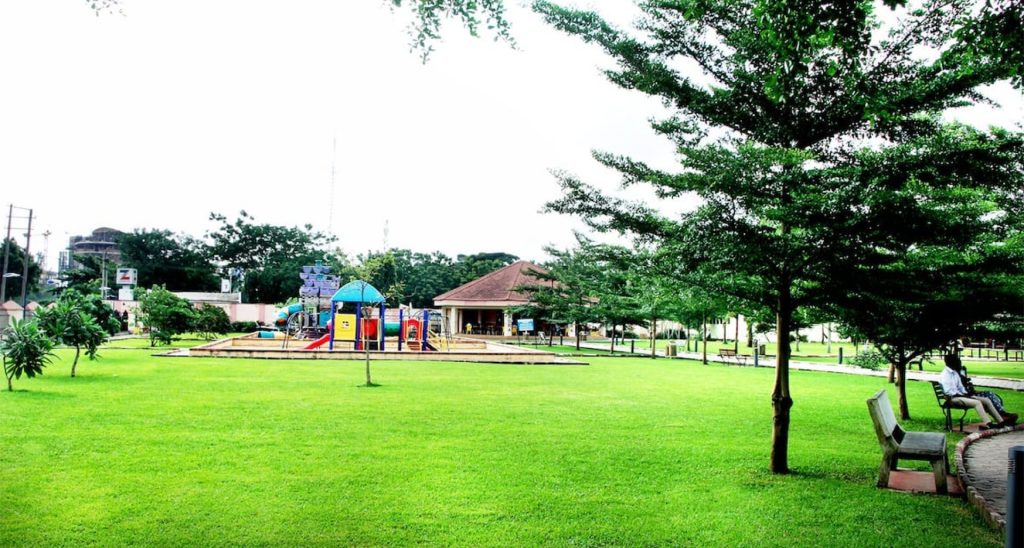
The Lagos State Parks and Gardens Agency, LASPARK, has announced that all public parks under its management across the state will be temporarily closed for routine maintenance and upgrades.
In a statement released on January 9 and shared via its official platforms early Saturday, LASPARK said, “All parks under our management will be closed to the public from January 12 to January 31, 2026.
“This follows increased visitor activity during the recent festive season.”
The agency listed several popular recreational spots that will be affected, including “Ndubisi Kanu Park, Alausa JJT Park, Dr. Finnih Abayomi Park in Oregun, and all other LASPARK-managed parks across Lagos State.”
READ ALSO:
Explaining the reason for the closure, LASPARK added, “The temporary shutdown is necessary to carry out essential landscaping, facility repairs, and general upgrades to ensure that our parks remain safe, clean, and enjoyable for residents and visitors.”
The agency also stressed that the exercise aligns with its broader mandate, noting, “This maintenance programme is part of our commitment to providing well-maintained green spaces that promote relaxation, wellness, and environmental sustainability.”
LASPARK assured residents that “all parks will reopen at the end of the maintenance period.”
News
PAP Sends Additional 34 Foreign Post-graduate Scholarship Beneficiaries To UK Varsities
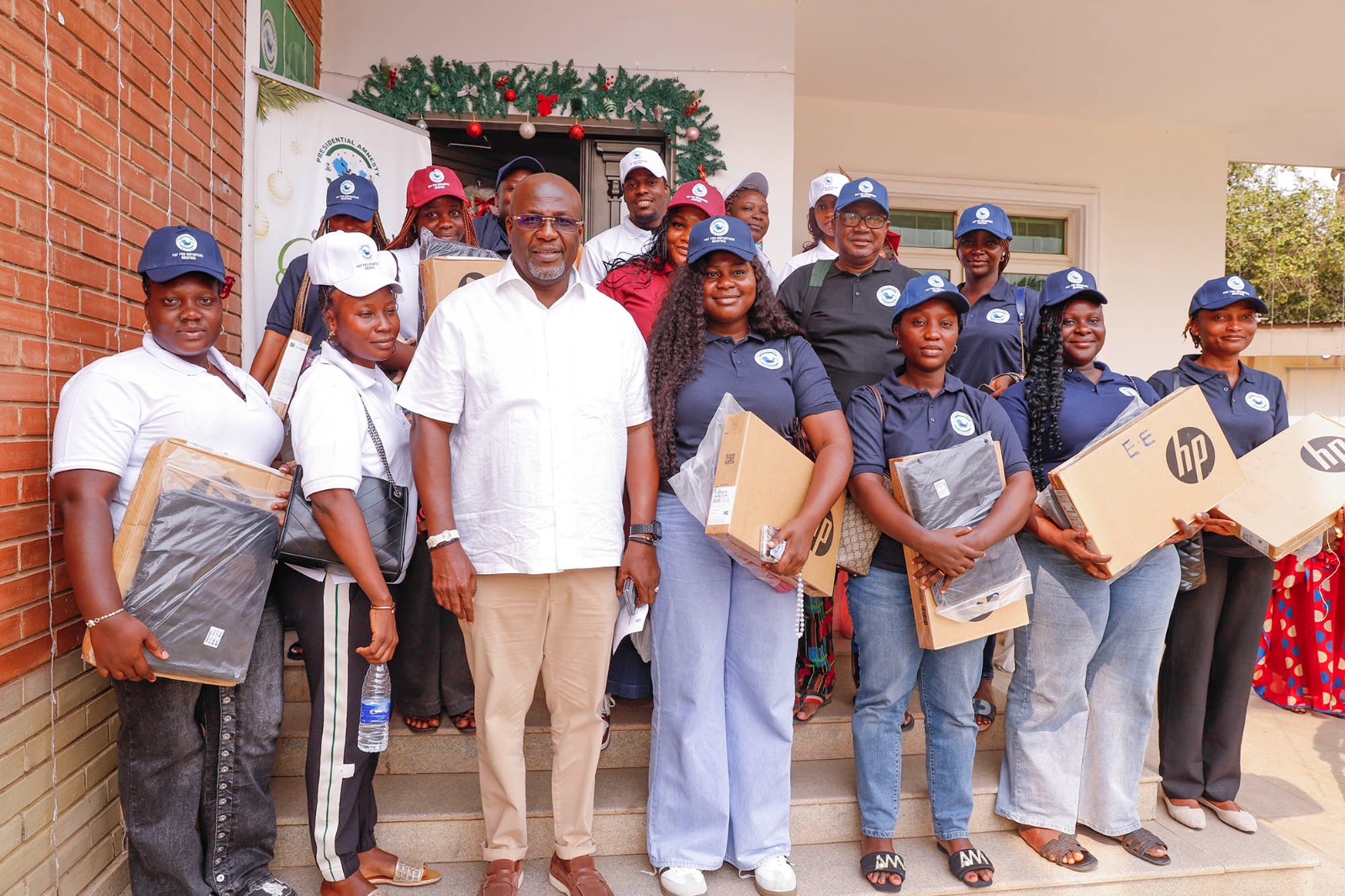
The Presidential Amnesty Programme (PAP) has deployed an additional 34 foreign post-graduate scholarship beneficiaries to various universities in the United Kingdom for the 2025-2026 academic year.
This was contained in a statement made available to newsmen in Warri by Mr Igoniko Oduma, Special Assistant on Media to Dr. Dennis Otuaro, the Administrator, PAP.
According to the statement, the scholars’ programmes include data science, fintech analytics, cyber security, international energy law and policy, construction project management, public health, agri-food technology, electrical and petroleum engineering, among others.
The statement added that more foreign post-graduate scholars will be sent to UK universities in the current academic session.
“In December 2025, nine students, who were the first set of offshore post-graduate scholarship developments by the PAP Administrator, Dr Dennis Otuaro, for the 2024-2025 academic year, graduated from their various programmes in UK universities.
READ ALSO:PAP Scholarship Scheme Vehicle For Better Future For Niger Delta —Otuaro
“Otuaro has deployed over 9000 students to universities within and outside Nigeria for different industry-relevant programmes since he assumed office in March 2024,” the statement partly reads.
Speaking at the pre-departure orientation programme for the scholars at the PAP headquarters in Abuja, on Thursday, Otuaro said that the large-scale deployment was aimed at making the Niger Delta a knowledge-driven region.
He said that his leadership reinvigorated the programme to give it a new momentum in service delivery to the people of the region based on the mandate of President Bola Tinubu.
Otuaro said, “We are sending all of you for post-graduate studies in various universities in the United Kingdom.
“The PAP now has a new momentum and direction because of the repositioning and broad reforms that we carried out in line with the mandate of His Excellency, President Bola Ahmed Tinubu GCFR.
READ ALSO:Otuaro Tasks Media On Objective Reportage
“The objective behind the huge scholarships deployment is to ensure that we develop the needed human capital to transform the Niger Delta and generate knowledge-wealth.
“We want to develop relevant manpower in critical disciplines for our region and by extension, the country, because you are expected to contribute your quota to national development after successful graduation.”
The PAP boss, who was represented at the event by his Technical Assistant, Mr Edgar Biu, advised the scholars to study hard to achieve academic excellence in their various fields of research.
According to him, the scholars have an obligation to justify the Federal Government’s investment in their education and future.
READ ALSO:I’m Not Distracted By Anti-Niger Delta Elements, Says PAP Boss, Otuaro
He reiterated his warning that beneficiaries should not take for granted the opportunity to further their academic pursuits in the interest of the Niger Delta and indeed the country.
Otuaro expressed appreciation to President Tinubu for his “enormous interest and support for the Programme”, particularly the approval of an upward review of the programme’s budget from N65billion to N150billion.
He also expressed gratitude to the National Security Adviser, Mallam Nuhu Ribadu, for his impeccable guidance and supervision of the programme’s initiatives.
Otuaro, therefore, cautioned the scholars to obey their host country’s laws and the rules and regulations of their various institutions, stressing that they are ambassadors of Nigeria, the Niger Delta and their communities and families.
Highpoint of the orientation programme was the presentation of laptops to the scholars to help them in their studies.

 News4 days ago
How To Calculate Your Taxable Income
- Metro3 days ago
Edo widow-lawyer Diabolically Blinded Over Contract Seeks Okpebholo’s Intervention
- Headline4 days ago
Russia Deploys Navy To Guard Venezuelan Oil Tanker Chased By US In Atlantic
- Politics2 days ago
APC Leaders, Tinubu/Shettima Group Call For Wike’s Removal As FCT Minister
- Entertainment4 days ago
VIDEO: ‘Baba Oko Bournvita,’ Portable Drags His Father, Alleges Bad Parenting, Extortion
- Metro4 days ago
JUST IN: Court Grants Malami, Wife, Son N500m Bail Each
- Politics4 days ago
2027: Details Of PDP Leaders, Jonathan’s Meeting Emerge
- Politics2 days ago
Wike A ‘Pestilence’ On Rivers, I Resigned Because Of It – Ex-Commissioner
- News3 days ago
Expert Identify Foods That Increase Hypertension Medication’s Effectiveness
- Headline1 day ago
Science Discovers Why Hungry, Broke Men Prefer Bigger Breasts


