
News
OPINION: Wike’s Verbal Diarrhea And Military Might

By Israel Adebiyi
Power, in its rawest form, is a test of character. It exposes the nobility or the nakedness of a man’s soul. Few public figures in contemporary Nigeria embody this paradox more vividly than Nyesom Wike, the current Minister of the Federal Capital Territory and former Governor of Rivers State. For years, Wike has walked the corridors of power like a man possessed by his own echo, thunderous, dramatic, and unrepentantly confrontational. The recent viral video of his verbal clash with a young military officer in Abuja did not surprise many. It was merely the latest episode in a long-running drama that reveals the flaws of a man whose tongue often runs faster than his wisdom.
In Yoruba parlance, there is a saying: “Eni tí ọ̀rọ̀ rẹ̀ ju òye rẹ̀ lọ, àìníyàn ló ń dá.” – “He whose words outrun his wisdom is courting disgrace.” Wike’s public life has been a theatre of that truth. From Port Harcourt to Abuja, his words have been both his power and his undoing.
As Governor of Rivers State, Wike ruled with the swagger of an emperor and the vocabulary of a street fighter. He earned the moniker “Mr. Projects,” and indeed, his tenure was dotted with visible infrastructural strides. But beneath the shine of concrete lay the shadows of fear and intimidation. He hounded political opponents, mocked rivals, and often reduced governance to the vulgar display of verbal warfare. To disagree with him was to invite a tongue-lashing; to stand up to him was to be publicly shamed. The Yoruba have another proverb for such temperament: “Bí ọba bá nà á ní kó má fò, àgbàlagbà ló ní kó má jókòó” (“When the king flogs you and says you must not cry, only elders tell you to sit down.”) Power without empathy, after all, is tyranny in democratic clothing.
Traditional rulers were not spared his tongue, nor were clerics whose sermons did not flatter his politics. The pulpit, the palace, and the public square all felt the sting of his verbal excesses. It was as though Wike mistook aggression for authority. And in a political culture that too often confuses loudness for leadership, he found applause where rebuke was deserved. Yet, “Bí a bá ń pè orí burúkú ní ‘adé,’ ó máa ń rò pé òun ló ń jẹ́ ọba” (“When a fool is constantly hailed as king, he soon forgets his folly.”)
When President Bola Tinubu appointed him as FCT Minister, many wondered how a man with such combustible temperament would manage a city as complex and delicate as Abuja. The capital, after all, is not a political playground but the seat of the nation’s dignity. But Wike carried his Rivers temperament into the heart of power. In less than a year, Abuja has witnessed more demolitions than decorum, more decrees than dialogue. At every turn, he has spoken more like a conqueror than a public servant.
MORE FROM THE AUTHOR:OPINION: Trump Of War
The recent altercation with a 24-year-old military officer, caught on video, offered a perfect metaphor for his style. The scene was classic Wike – loud, animated, confrontational – but what made it unforgettable was the quiet defiance of the young soldier who stood his ground. The officer’s composure, his disciplined refusal to be cowed by political bluster, was the moral turning point. For once, Wike’s verbal missiles bounced off the shield of institutional dignity. It was as if the spirits of Nigeria’s fatigued citizens found expression in that soldier’s calm defiance – a reminder that power must bow before order, not the other way around.
The Yoruba say, “Àgbà tó ń sọ̀rọ̀ bí ọmọ kékeré, ọmọ kékeré á gbọ́ pé àwọn yóò jọ ṣeré” (“When an elder speaks like a child, the young will mistake him for a playmate.”) Wike’s behavior in that viral clip stripped the office of its dignity. His lack of restraint not only disrespected the uniform but desecrated the values of leadership itself. The soldier’s uniform represents sacrifice; his silence, discipline; and his stance, institutional integrity. That a federal minister would exchange words so loosely with a young officer is not just an issue of temperament – it is a failure of self-governance.
Temperament, indeed, is the hidden face of leadership. A man’s true power is not in how loudly he commands but in how calmly he corrects. Wike’s monthly media engagements – once an opportunity to engage citizens and showcase accountability – soon degenerated into televised outbursts. He berated journalists, mocked political opponents, and turned governance into a stage for self-advertisement. It is said that the Presidency, weary of the embarrassment, quietly halted the briefings. One can only imagine the relief of aides who no longer had to brace themselves for the next verbal explosion.
In another Yoruba saying, “Ìbínú kò jẹ́ kí ọba jẹ́ aláàánú” (“Anger does not allow a king to be merciful.”) Wike’s anger, too easily provoked and too publicly displayed, has long clouded his judgment. Yet the essence of power is not in the fear it inspires but in the respect it earns. The greatest leaders in history were not those who shouted the loudest but those who led with quiet conviction. The soft-spoken often outlast the loud-mouthed because, as the Yoruba remind us, “Oro buruku to bá jé títí, adùn ni yóò dá” (“Even bitter words, if spoken with patience, will end sweetly.”)
The Abuja episode also calls attention to the need for institutional supremacy over personal might. Nigeria’s enduring tragedy is that men often see themselves as greater than the offices they occupy. We build strong individuals but weak systems, and when those individuals fall, the institutions crumble with them. But as Yoruba wisdom teaches, “A kì í jẹ́ kí òpó ọmọ ènìyàn dàgbà ju àgọ́ lọ” (“We do not allow the child of a person to grow taller than the camp.”) No one, however powerful, should be above the rules of engagement.
MORE FROM THE AUTHOR:[OPINION] AMUPITAN- “His-Story” Beckons
This is why the conduct of that young soldier deserves commendation. In choosing duty over deference, he reminded us that respect for the uniform is non-negotiable. Every insignia on that khaki represents years of sacrifice, discipline, and loyalty to the nation. To belittle it, no matter one’s rank, is to insult the Republic itself. The Yoruba have a proverb that aptly fits this: “Àṣọ àgbà ni ìyàwó ń wọ, kó mọ̀ pé a kì í rí tìkára ẹni tí ó tójú” (“A bride wearing her mother’s cloth must remember she didn’t weave it herself.”) The power Wike wields is not personal; it is borrowed authority. To wear the garment of public office with arrogance is to forget that the garment belongs to the people.
Equally troubling is the recurring use of armed might to pursue private or political objectives, from land enforcement to silencing dissent. When the coercive instruments of state become tools in the hands of temperamental men, democracy trembles. The military, police, and paramilitary institutions must never be drawn into the theatrics of power or personal vendettas. “Ogun tí a bá dá lórí èké, òtítọ́ ni yóò ṣẹgun” (“The war waged on falsehood will always be won by truth.”)
Nigeria must now return to the discipline of process. When institutions are respected, the law becomes sacred. When personalities dominate, the state becomes an extension of ego. Wike’s episode should not be dismissed as mere drama; it is a symptom of a larger sickness – the collapse of restraint among those entrusted with authority. The lesson is simple: when powerful men act without decorum, they shrink the dignity of governance and weaken the faith of citizens in democracy itself.
One hopes that Wike, if only for a moment, reflects on this encounter. True power is not in shouting down a soldier; it is in mastering one’s temper. Leadership demands silence as much as speech, grace as much as grit. “Bí ọba bá ń sunkún, àwòko kì í rẹ́rìn-ín” (“When a king weeps, the parrot does not laugh.”) There are moments when restraint is the greatest show of strength.
In the end, that young officer did more than defend a piece of land; he defended the idea that Nigeria must be governed by institutions, not personalities. He reminded the nation that authority must be exercised with humility, not hubris. The Yoruba have the final word: “Àgbà tó bá ní kó fi ọwọ́ kan ọ̀run, ẹni tí ń dí ọwọ́ rẹ̀ ni yóò bínú” (“When an elder tries to touch the sky, it is those holding his hand that will feel the strain.”) Wike’s latest outburst strained not only his image but the very institution he represents.
Perhaps it is time the minister learned that power is most dignified when it is quiet, and that the loudest drum often bursts first. For in the theatre of governance, words are not weapons; they are mirrors. And when the man in power looks into that mirror and sees only himself, he has already lost the people.



News
FG Declares Public Holidays For Christmas, New Year Celebrations
The Federal Government has declared December 25, 26 and January 1, 2026, as public holidays.
Announcing this on behalf of the Minister of Interior, Olubunmi Tunji-Ojo, the ministry’s Permanent Secretary, Magdalene Ajani, said the holidays are to mark Christmas, Boxing Day and the New Year celebrations respectively.
Tunji-Ojo called on Nigerians to reflect on the values of love, peace, humility and sacrifice associated with the birth of Jesus Christ.
READ ALSO:Lagos Declares Holiday For Isese Festival
The minister also urged citizens, irrespective of faith or ethnicity, to use the festive period to pray for peace, security and national progress.
According to him, Nigerians to remain law-abiding and security-conscious during the celebrations, while wishing them a Merry Christmas and a prosperous New Year.
See the full statement below:
PRESS STATEMENT
FG DECLARES DECEMBER 25, 26, 2025 AND JANUARY 1, 2026 PUBLIC HOLIDAYS TO MARK CHRISTMAS, BOXING DAY AND NEW YEAR CELEBRATIONS
The Federal Government has declared Thursday, 25th December 2025; Friday, 26th December 2025; and Thursday, 1st January 2026 as public holidays to mark the Christmas, Boxing Day and New Year celebrations respectively.
READ ALSO:Full List: FG Releases Names Of 68 ambassadorial Nominees Sent To Senate For Confirmation
The Minister of Interior, Dr. Olubunmi Tunji-Ojo, who made the declaration on behalf of the Federal Government, extended warm Christmas and New Year felicitations to Christians in Nigeria and across the world, as well as to all Nigerians as they celebrate the end of the year and the beginning of a new one.
Dr. Tunji-Ojo urged Christians to reflect on the virtues of love, peace, humility, and sacrifice as exemplified by the birth of Jesus Christ, noting that these values are critical to promoting unity, tolerance, and harmony in the nation.
The Minister further called on Nigerians, irrespective of religious or ethnic affiliation, to use the festive season to pray for the peace, security, and continued progress of the country, while supporting the Federal Government’s efforts towards national development and cohesion.
“The Christmas season and the New Year present an opportunity for Nigerians to strengthen the bonds of unity, show compassion to one another, and renew our collective commitment to nation-building,” the Minister stated.
Dr. Olubunmi Tunji-Ojo also enjoined citizens to remain law-abiding, security conscious, and moderate in their celebrations, while cooperating with security agencies to ensure a peaceful and safe festive period.
The Minister wishes all Nigerians a Merry Christmas and a prosperous New Year.
SIGNED
Dr. Magdalene Ajani
Permanent Secretary
Ministry of Interior
December 22, 2025.
News
PHOTOS: New Era In Furupagha-Ebijaw As Okpururu 1 Receives Staff Of Office
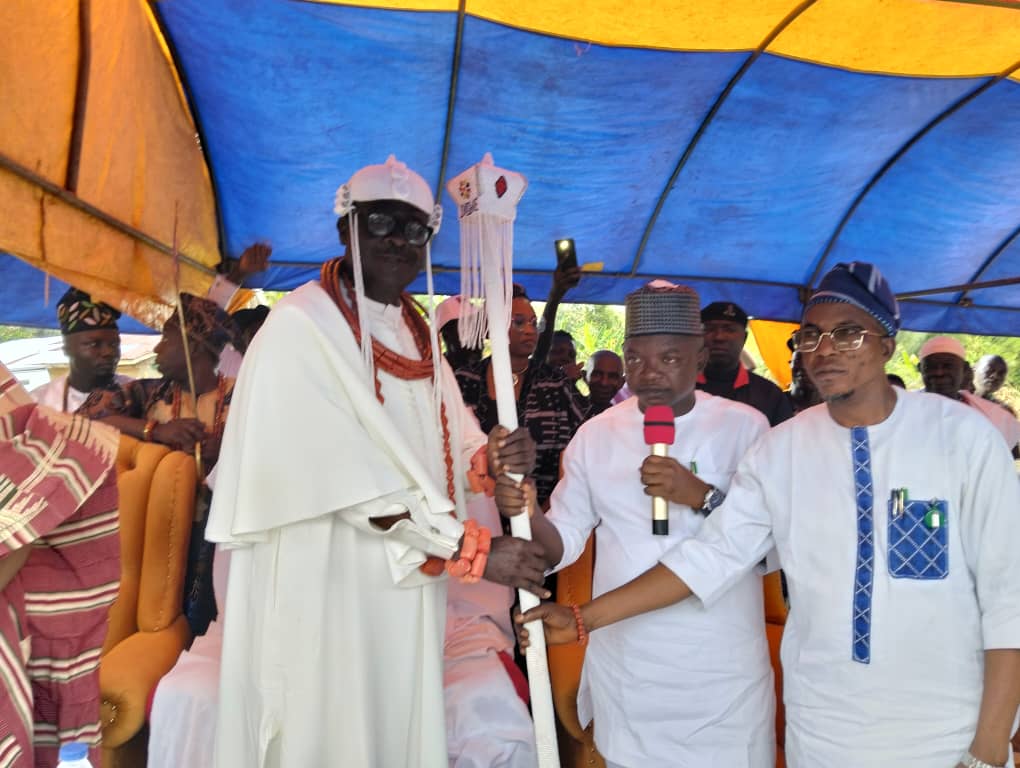
It was an atmosphere of excitement and display of culture and unity in Ebijaw community, Odigbo Local Government Area of Ondo State, as the state governor, Lucky Aiyedatiwa, formally presented Instrument of Appointment and Staff of Office to His Royal Majesty (Pere), Meus Tunde Ditoru-Muje, Opu-Ugo, Okpururu 1, the Ibediowei of Furupgha-Ebijaw Kingdom.
The ceremony, which attracted government officials, traditional rulers and royal fathers from within and outside the local government, also had in attendance the Ibe and Amaokosuowei (oldest man in the kingdom), Pa Emmanuel Odushu, and dignitaries from the over 17 communities under the kingdom.

In his speech, Governor Aiyedatiwa reminded the new King that he is a father to all the people in his domain, and that he should: “bear in mind that the responsibility to lead the kingdom to a greater level of social and economic progress now lies squarely on your shoulders.”
The governor, who was represented by the Commissioner for Local Government and Chieftaincy Affairs, Alhaji Amidu Takuro, while reminding traditional rulers in the state that the government will not tolerate any chieftaincy appointments by traditional ruler without the state government’s approval particularly on disputed territories, prayed God to “help your Royal Majesty to succeed in this new task of traditional leadership.”

READ ALSO:Court Dissolves Petitioner’s Marriage Over Lack Of Love, Care
Earlier, in his welcome speech, Odigbo Local Government Council Executive Chairman, Hon. Adegoroye Taiwo, while urging the Pere and “his Traditional Chiefs to work in promoting peaceful coexistence, harmony, and enduring development in your respective domains,” appealed to HRM to “carry everyone along, have the heart of forgiveness. As a traditional ruler everyone belongs to you. So work with them.”
In his speech, the Okpururu 1 thanked the governor and the state government for recognising the Furupgha-Ebijaw traditional throne for the first time after decades, noted that “this singular act has wiped away decades of longing, restored the dignity of our people, and written our name boldly in the annals of history.”

“For the first time since the founding of this community by our forefathers, our traditional institution has been formally recognised by the Government of Ondo State with the presentation of a Staff of Office.
“By this recognition, your administration has demonstrated fairness, inclusiveness, and respect for tradition. You have listened to the voice of history, justice, and the aspirations of our people, and for this, we shall remain eternally grateful.”

READ ALSO:My Wife Dented My Image, Took Our Marital Crises To Radio Stations — Husband
HRM, pledged to “rule with wisdom, fairness, and transparency, to promote peace and unity among our people, and to work closely with the government at all levels to advance development, security, and prosperity in our land.”
The Pere, while acknowledging that the “Staff of Office is not merely a symbol of authority; it is a symbol of identity, unity, and hope,” said “It affirms our heritage, strengthens our cultural values, and reinforces the role of the traditional institution as a partner in governance, peace-building, and grassroots development.”

He assured the governor of ruling with “utmost humility, fear of God, and total commitment to service.”
He called on sons and daughters of the kingdom “to rally together, put aside differences, and join hands with the traditional institution and government to move our community forward,” stressing that “this achievement belongs to all of us.”

The Pere seized the occasion to draw the attention of the governor to challenges such as unavailable of motorable roads, lack of electricity and potable water, and perennial flooding and erosion in communities under the kingdom.


News
Edo SWAN Distances Self From Online Publication Against Enabulele
…demands retraction, warns member against unverified publication
The Sports Writers Association of Nigeria (SWAN), Edo State Chapter, has distanced itself from an online publication titled: ‘Samuel Ogbemudia Stadium Shut Against Stephen Keshi.’
A statement signed by the Secretary of the association, Comrade Idahosa Moses, Edo SWAN said neither was it consulted nor involved in the “framing of the narrative presented by the online publication.”
Edo SWAN described the publication as misleading, sensational and grossly lacking in factual balance.
The statement partly reads: “SWAN finds the report inconsistent with the ethical standards and core values of the journalism profession.
READ ALSO:SWAN Orders Nationwide Boycott Of NFF Activities
“While Edo SWAN recognises and respects the sentiments expressed by Mr. Austin Popo, Secretary of the Board of Trustees of the Stephen Keshi Football and Vocational Training Centre (SKFTVC), concerning the challenges encountered in securing the use of the Samuel Ogbemudia Stadium for this year’s Stephen Keshi Memorial National Under-17 Soccer Tournament, it is imperative to state that such concerns should not be reported in a manner that imputes motives, assigns blame without verification, or portrays public officials as acting in bad faith.”
On allegations against the Executive Chairman of the Edo State Sports Commission, Hon. Amadin Desmond Enabulele, in the publication, SWAN described Enabulele as a “seasoned professional with a proven track record of integrity and dedicated service to sports development in Edo State.”
“Any insinuation that he or the Commission deliberately acted to undermine the memory and legacy of the late Stephen Okechukwu Keshi is not only unfair but also unsupported by verifiable facts.”
Edo SWAN, therefore, “strongly cautions the publisher of Popular News to desist from publishing unverified and inflammatory reports capable of misleading the public and damaging reputations.”
READ ALSO:Botswana’s New President Sworn In As Voters Kick Out Ruling Party Of Nearly Six Decades
“The Association formally demands that the controversial publication be withdrawn immediately and that an unreserved apology be tendered to Hon. Amadin Desmond Enabulele.”
SWAN further “extends its sincere apologies to the Chairman of the Edo State Sports Commission, who is also a Patron of the Edo SWAN Chapter, for any embarrassment or misrepresentation arising from the said publication, and assures him of its continued respect, support and cooperation.”
Edo SWAN, while stating that it “shares in the collective responsibility of preserving and honouring the legacy of the late Stephen Keshi—a national icon whose contributions to Nigerian football remain indelible—the Association, maintained that “this noble course must be pursued through constructive engagement, professionalism and mutual respect among all stakeholders.”
Edo SWAN, thereafter, warned “all sports writers in the state to avoid unverifiable reports and sensationalism, stressing that any member found culpable of professional misconduct will be decisively sanctioned in line with the Association’s statutes.”

 Metro5 days ago
Alleged Organ Harvesting: Bereaved Families Rush To Check Corpses
- News4 days ago
Police Confirm Edo Tanker Explosion, say No Casualty
- News3 days ago
Former Delta North senator Peter Nwaoboshi Dies
- News5 days ago
Edo SSG Calls On Media To Support Govt Policies, Assures Better Welfare
- Metro2 days ago
JUST IN: Former Edo Information Commissioner Is Dead
- News4 days ago
Grassroots To Global Podium: Edo Sports Commission Marks Enabulele’s First Year In Office
- News4 days ago
Otuaro Tasks Media On Objective Reportage
- News4 days ago
Okpebholo Sympathises With Otaru, People of Auchi Over Tragic Tanker Fire Incident
- News4 days ago
IPF Hosts Media Conference, Seeks Protection For N’Delta Environment
- News2 days ago
Coordinator, Edo First Lady Office, Majority Leader, Rights Lawyer, Others Bag 2025 Leadership Award


