
Headline
ISWAP Exploiting WhatsApp, Telegram To Destabilise Nigeria – Report
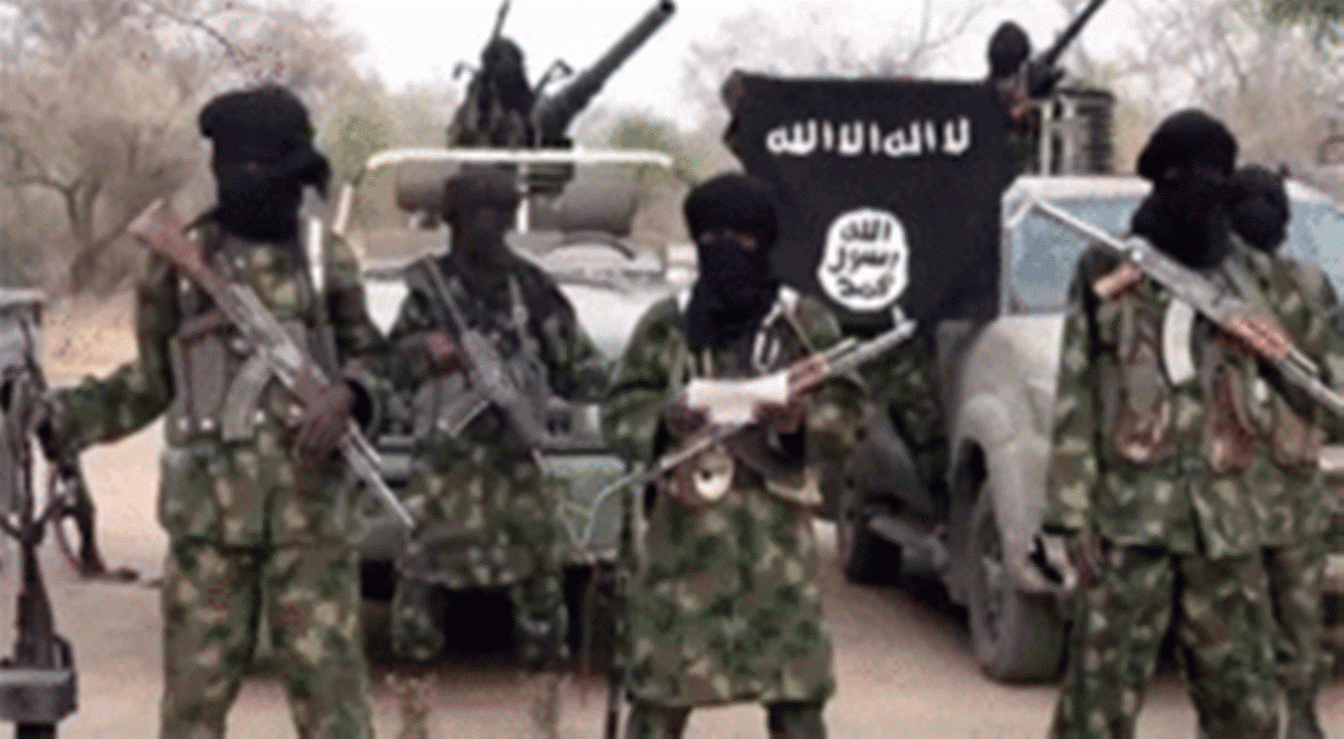
A report by the Institute for Security Studies has revealed that the Boko Haram terrorists’ breakaway group, the Islamic State of West Africa, are skillfully exploiting digital platforms, particularly, WhatsApp and Telegram, to organise and carry out their criminal activities in the West African region.
This is as the institute urged governments across the African continent to pressure tech companies to deal with terrorism online.
The report noted that as the physical and online worlds fuse, many groups, especially Al-Qaeda in the Islamic Maghreb, are embedding the internet deeper into their operations in the West African region.
“Groups such as the Boko Haram breakaway faction, Islamic State West Africa Province, appear to rely on messaging services like WhatsApp and Telegram to communicate internally and externally because they prefer these apps’ encrypted nature. ‘Telegram is becoming the new frontline for terrorist groups in Africa,’ warns Mr Bukarti. ‘On last count, ISWAP had over 50 Facebook and Telegram accounts.’ Furthermore, ‘there’s no scrutiny; nobody seems to care in Africa.
“While larger platforms such as Facebook, Twitter and WhatsApp have the resources to offer a degree of content moderation, many smaller operators don’t. These are the ones terrorist groups prefer’.
“According to researchers such as Bulama Bukarti of the Tony Blair Institute for Global Change. What’s more, given their decentralised character, these groups are proving harder to intercept and are achieving a reach online that would not be possible in the physical world,” the report said.
It noted that a recent workshop in Ghana organised by Tech Against Terrorism laid out the expansive nature of online terrorist content in West Africa and highlighted strategies to mitigate the risks. TAT is a non-governmental organisation established by the United Nations Counter-Terrorism Committee Executive Directorate to forge ties between tech platforms, academia and civil society.
The institute stated further that violent extremist groups in West Africa, especially in the Sahel and Lake Chad Basin, use the internet to deliver propaganda, recruit, radicalise and incite attacks, and finance and plan their operations.
“When al-Shabaab attacked the Westgate shopping mall in Nairobi, Kenya in 2013, the group live-blogged the terrifying event on Twitter, taunting the authorities who were struggling to end the siege. It represented a chilling milestone in the weaponisation of social media platforms and demonstrated the audacity and adaptive nature of Africa’s armed groups.
READ ALSO: Terrorism: There’s Boko Haram, ISWAP In Government – SDP Presidential Candidate, Adewole
“Nearly a decade later, terrorist groups in West Africa are fine-tuning their tactics to hijack social media platforms and messaging apps. Parts of the region have been home to the fastest growing and deadliest violent extremists, the Global Terrorism Index reveals. And there has been a steady rise in incidents where social media platforms and messaging apps have become an integral part of extremists’ modus operandi.
“A former head of Facebook’s Counterterrorism and Dangerous Organizations Policy section and now programming leader for the Global Internet Forum to Counter Terrorism, a TAT partner, Dr Erin Saltman, is a prominent voice in this field. She says greater efforts are needed to encourage tech companies to ‘prevent and respond’ to terrorism online by increasing their transparency and reporting while respecting human rights,” the September 15 report added.
It added that Anne Craanen, who monitors developments in West Africa, noted that extremists are now using smaller platforms to circumvent controls aimed at removing terrorist content,
“For example, AQIM – arguably the region’s most aggressive user of online communication – uses ‘beacon’ websites to draw internet traffic to smaller sites. It also uses ‘aggregators’ designed to offer viewers a cluster of links to the same piece of terrorist content, to evade content moderation.”



Headline
How Our Airstrikes Stopped Christmas Attacks In Nigeria — US Lawmaker
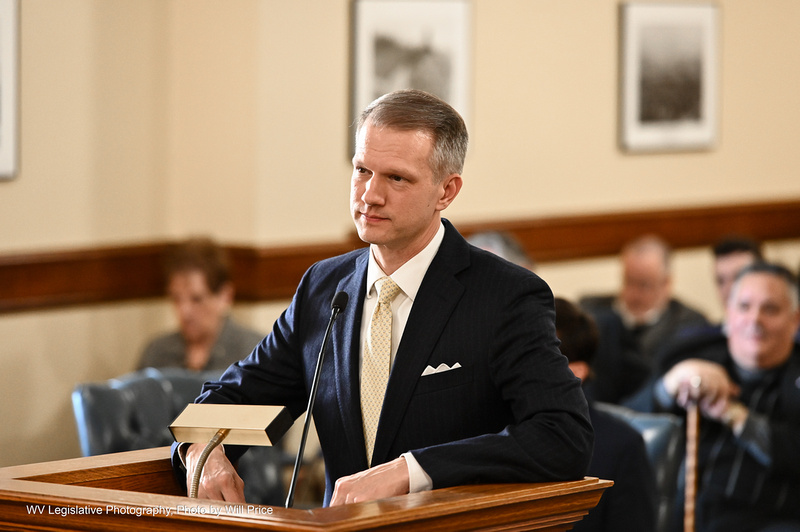
Riley Moore, a member of the United States House of Representatives from West Virginia’s 2nd District, has linked the absence of Christmas attacks in Nigeria this year to US military airstrikes carried out against Islamist militants on Christmas Day.
In a post on his official X account on Saturday, Moore contrasted the situation with the past two Christmas seasons, during which he claimed Christians were killed in attacks across parts of Nigeria.
The lawmaker noted that this year’s response targeted extremist groups instead of marking another period of violence.
READ ALSO:Rep Moore Confirms 12 Tomahawk Missiles Launched In Sokoto
He added that US forces acted decisively against militants in coordination with the Nigerian government.
“For the past two Christmases, Christians have been murdered in Nigeria. This year, thanks to @POTUS, Radical Islamic Terrorists were on the receiving end of 12 Tomahawk missiles as a present.
“The successful strikes on ISIS, in coordination with the Nigerian government, are just the first step to secure the country and end the slaughter of our brothers and sisters in Christ,” Moore wrote.
US President Donald Trump said on Thursday that American forces had conducted deadly strikes against Islamic State terrorists in north-western Nigeria.
Trump, who spoke via his Truth Social platform, warned that more attacks would follow if the militants continued killing Christians, adding that the Department of War executed numerous “perfect strikes.”
Headline
U.S. Lawmaker Reacts To Nigeria, U.S. Airstrikes
United States Congressman, Riley Moore, has stated that President Donald Trump is determined to put an end to the killing of Christians in Nigeria, warning that further action may follow if the violence persists.
Moore made the statement on Friday via his official X handle.
According to the lawmaker, the strike represents the first step in addressing what he described as the ongoing slaughter of Christians and the broader security crisis affecting Nigerians across religious and ethnic lines.
READ ALSO:US Dept Of War Shares Video Of Air Strikes In Nigeria
“President Trump has been clear that the killing of Christians in Nigeria must end,” he said.
He that the administration’s resolve on the matter should not be underestimated.
“As I stated at the outset: Do not test President Trump‘s resolved in this matter.
READ ALSO:JUST IN: US Forces Bomb Terrorists Camps In Nigeria
“Tonight’s strike in coordination with the Nigerian government is just the first step to ending the slaughter of Christians and the security crisis affecting all Nigerians,” he said.
He stressed that the operation signals a stronger stance by the United States in support of Nigeria’s efforts to tackle terrorism and violent extremism, noting that further measures could be taken if the situation does not improve.
Headline
US Dept Of War Shares Video Of Air Strikes In Nigeria

A video footage of the US military air strikes in Nigeria has emerged.
The video was released by the US Department of War following its air strikes against terrorists in Sokoto.
Earlier, the US secretary of War, Pete Hegseth had confirmed that military air strikes hit terrorists in Nigerians, saying it was deadly.
Later on, the US. African Command, confirmed that it conducted the attacks described as very deadly by President Donald Trump.
Trump said he was only keeping the promise he made earlier last month to strike the terrorists he believes are killing innocent Christians.
READ ALSO:JUST IN: US Forces Bomb Terrorists Camps In Nigeria
Although described as powerful and deadly, the casualty caused by the attack is yet to be released.
Explaining further, security expert, Brant Philip, said the strikes may have been launched “from the USS Paul Ignatius, using a Tomahawk missile.”
The Nigerian government through its ministry of foreign affairs has also confirmed that the strikes were successful.
Watch video here

 News5 days ago
PHOTOS: New Era In Furupagha-Ebijaw As Okpururu 1 Receives Staff Of Office
- News4 days ago
UBTH CMD Marks 120 Days In Office, Expresses Commitment To Providing Conducive Working Environment
- News4 days ago
FIRS Confirms NIN As Tax ID
- News5 days ago
FG Declares Public Holidays For Christmas, New Year Celebrations
- News5 days ago
OPINION: Gumi And His Terrorists
- Metro4 days ago
Fintiri Pardons Man Sentenced To Death For ‘Killing Herdsman In Self-defence’, Others
- News5 days ago
OPINION: Christmas And A Motherless Child
- News3 days ago
JUST IN: Kano Lawmaker, Sarki Aliyu Daneji, Dies Hours After Colleague’s Passing
- News3 days ago
FULL LIST: Churches That Don’t Celebrate Christmas
 News4 days ago
OPINION: My Man Of The Season


