
Headline
OPINION: Homeless Kids Invade South West

By Lasisi Olagunju
“A large percentage of them are from Niger Republic, Mali, and Chad.” The six South-West states are being overrun by an army of homeless young men of unknown address and of mystery background.
Some snakes have beauty; their nimbleness their strength. But these ones in every neighbourhood are not pretty snakes; their presence is ugly. They enter in anonymity, like an invalid, their fangs invisible.
Last Thursday, The Guardian newspaper ran a front page lead story with the headline: ‘Homeless kids invade Abuja, South-West’. The quote above which points at where they come from I lifted from that report. The Guardian and its sources fingered Niger Republic, Mali and Chad as the source of the human flood. I add and implicate northern Nigeria and the choice it makes. We see it every day in trucks and in trailers loaded with human consignments. They land aimless, wild and fear-inducing. The story continues:
“Many strangers move into the (South-West) region in trucks and articulated vehicles loaded with foodstuffs, livestock, and other items, and travel through the Ogbomoso axis into Oyo and to Ibadan. Some of them disembark in Ogbomoso and Ibadan in Oyo State, while others move to Ogun State, and the rest to Lagos State. From Ogbomoso and Ibadan, some disperse into other parts of the state, including Sabo, a large concentration of Hausa/Fulani community, as well as another such community in Ojoo, Iwo Road, and another large concentration at Akinyele, which houses what appears to be the largest pepper market in Nigeria,” the newspaper report said, quoting recent concerns raised by the ‘South-West Security Stakeholders Group’.
There are people who see the influx as a deliberate efflux of scum; something akin to NEPA’s load shedding. There are people who think it is population dumping and excretion of pooh on the Yoruba south. I see it as the natural consequence of elite irresponsibility and state failure. These movements have consequences, and they cannot be pleasant.
On February 21, 2024, Otunba Gbenga Daniel, senator and ex-Ogun State governor, sent out a tweet. He said rather ominously that “21 percent of Nigerians currently live in the South-West. The region is projected to hold close to 50 percent of our (Nigeria’s) population by 2050 because of the pattern of migration which will ultimately put greater strains on existing infrastructure…”
I do not know how ex-Governor Daniel arrived at his projection, but his reference to “pattern of migration” got me thinking. He may be right. And if he is right, the West will be in trouble – if it is not in trouble already. Every day, lorries carry youths from outside Yoruba land to Yoruba land. That is the terrifyingly truthful reality. We see trucks and lorries and crammed buses of boys and men every day entering the west. Yet, the factory producing the homeless runs non-stop and at full capacity, day and night.
Migration is not inherently bad. What is abhorrent is when the quality of the migrants is bad. I was in Liberia towards the end of that country’s civil war. I saw what it meant to have more than half of a county’s entire population in a zone. The country’s total population today is 5.3 million. Before the Liberian civil war, 250,000 people lived in the capital, Monrovia; the war pushed that figure up to what it is today – 1.735 million people, causing unending disruptions that have refused to go away.
MORE FROM THE AUTHOR: OPINION: ‘The Reign Of Our Emperor’
Recently, I wrote against shelling out 100 young female orphans into mass marriage in Niger State. I wrote about the danger of indiscriminate wife-buying and the production of a huge unproductive population, a mass of children that are sentenced to uneducation from the womb. A consortium in Kano came out attacking me for counting their spirit’s nine toes in his presence. They called me a hater of the North. Friends and foes forwarded their piece to me. I commend their diction but deplore their dictum. I wish I could tell them sorry for stepping beyond my ‘Yoruba’ bounds. But, I cannot. I can hear the plaintive words of Socrates “How you have felt, O men of Athens, at hearing the speeches of my accusers, I cannot tell; but I know that their persuasive words almost made me forget who I was — such was the effect of them; and yet they have hardly spoken a word of truth.” Where the northern elite stand is deplorable, quicksand of wickedness.
I have read sympathetic reports that described the daily arrivals as security and economic migrants. That fact itself is problematic – especially when the receivers are challenged too by existential problems. We say tèmi tó mi l’érù má dìkun (what I carry is enough load, do not add to it). Yoruba land already has more than enough of its homelessness to contend with. In shanties and under bridges, adults – male and female – with street children compete for space at night. Even those with roofs over their heads are ‘internally’ displaced in their homes by hunger and want. Now, combine anger inherent in all these with the troubles of unwanted guests. What we have is a volcano humming and rearing to go.
Mass migration like we are discussing potentially ties forehead hairs to occipital strands. Check how ‘foreign’ and ‘indigenous’ okada riders structure their presence across the South. The home boys and the ‘invaders’ hardly mix. Their relationship is forever fanned with the heat of tension. It can’t be different and better. Between popcorn and our molars, there is no enduring friendship; there has never been. Gúgúrú pèlú enu, won kìí s’òré títí d’alé.
Myron Weiner, American author and professor of Political Science, in his ‘A Security Perspective on International Migration’ published in 1992 stressed that “conflicts create refugees but refugees can also create conflicts.” That is the fear that is discussed in hushed tones in every neighborhood in south-west Nigeria now.
What does it mean for the South-West to carry half of Nigeria’s population? ‘The World Population Prospects’, published in 2017 by the United Nation’s Department of Economic and Social Affairs, said by 2050, the world would have 9.8 billion people. It said Nigeria, with eight other countries, would account for half of that figure. “Among the ten largest countries worldwide, Nigeria is growing the most rapidly. Consequently, the population of Nigeria, currently the world’s 7th largest, is projected to surpass that of the United States and become the third largest country in the world shortly before 2050,” the UN report predicted.
MORE FROM THE AUTHOR: OPINION: Kano’s Midnight Kingdom
The United Nations Population Fund Country programme document for Nigeria, published on 3 February, 2023, indicated that our population would reach 400 million by 2050. “The estimated population of Nigeria of 216 million and its annual growth rate of 3.2 percent is driven by a total fertility rate of 5.3. This rate is higher among rural households (5.9) and uneducated and poorest households (6.7). The population is expected to reach 400 million by 2050, making Nigeria the third most populous country globally,” the UNFPA report said.
Now, imagine half of 400 million Nigerians permanently living in Yoruba land as a result of migration from everywhere. Think of the cultural conflagration and the demographic disaster that will ensue. Think of the socio-political fissures, the tension and the permanent threat to peace and stability that will be the lot of the host. If 400 million live in western Nigeria with its present economic problems unsolved, you can be sure that more than half that figure will qualify to be described as homeless.
And, what does it mean to be homeless? The best definition of a situation always comes from those who are in it or have experienced it. “I used to think that the hardest thing about being homeless was not having a bed to sleep in – having to find a doorway, or a derelict building or the back of an abandoned car to lay your head. But I learnt from the young people that I am working with that that is not the hardest part of being homeless. Then I thought it was being hungry or cold. But that too is not the hardest part of being homeless. So I thought it was the boredom, having nothing to do, all day, every day, walking up and down trying to pass the time. But that is not the hardest part. Now I believe that the hardest part of being homeless is to live with the knowledge that if you disappeared from the face of the earth, no-one would even notice. That defines the value of your life. You are of no value to anyone; there is no one to whom you are important, no one who really cares. Your life is virtually meaningless. The message you receive from society, every minute of every day, is that you are not worth the trouble or effort or expense of providing you with even a small bedsit that you can call home.” Jesuit priest, Peter McVerry, wrote the above in his 2001 article, ‘Homelessness’.
“On 6 March, 1986, ten-year-old David Bright testified before the (United States) House Select Committee on Hunger and became an emblem of the homeless children of America in the 1980s. David lived in New York City’s Hotel Martinique, a festering behemoth that was home to 1,500 homeless children and their families.
“‘When I grow up,’ David said, ‘I will be the president of the United States. Then everyone will have a little money in their pockets.’
MORE FROM THE AUTHOR: OPINION: Petrol Pains, Wilderness Wanderings
‘”And,’ David added, ‘no little boy like me will have to put his head down on his desk at school because it hurts to be hungry.’”
The above is part of the introductory paragraphs of a 1989 piece written by Robert M. Hayes for the American Academy of Political Science. Hayes entitled his piece ‘Homeless Children.’ It is a study in societal rejection and abandonment.
Like that 10-year-old American boy, millions of children are on the street of Nigeria dying slowly and quietly in unremitting hunger and rejection. However, unlike the American boy, our own millions without homes do not have desks to put their hunger on. They rummage the dirt of gutters and sewages in search of the ever elusive hope of survival. If they are lucky or smart enough to live and their bones grow big enough, they migrate to the South without skills, compounding their suffering and homelessness. Rescuing them and saving ourselves is why we speak and write and refuse to be silenced. Yet, we are abused and called names.
Fortunately, those who read hatred in every criticism are a fading clan of clowns. There are great people in the North who are as concerned as any patriot could be. An old friend and Senior Advocate from one of the far northern states forwarded my column on mass wedding to me and thanked me. Another old friend, a retired General from the North-East, thumbed up my position and wrote to me: “Thank you. You people are keeping us busy.” This last Saturday, a very knowledgeable Imam from northern Nigeria, Sheikh Muhammad Nuru Khalid, granted a newspaper interview where he spoke against choices that encourage irresponsible child hatching and warned of the threat it poses to societal stability and cohesion. Khalid was the Chief Imam of Apo Legislative Quarters’ mosque in Abuja who was sacked in 2022 for preaching against the ills of General Muhammadu Buhari’s government. I am quoting his Saturday Tribune interview here, copiously:
“A child that was brought up on the streets does not know the affection of the family and he cannot have that love for anybody and therefore he can kill anybody. A child that is being prevented from having education with no justification, the envy in his heart will make him dislike any educated person, the system and the country itself.
“Those potential terrorists that we are seeing on the streets, children begging, children sleeping on the streets, children without clothes, without education, they are potential criminals. And criminals will get access to them to recruit them and become bandits. We have to work towards fairness and justice in governance so that there will be equity in economic opportunities. That will reduce the tendency of having more bandits.”
But it is not easy and won’t be easy. Sheikh Khalid said “If you remove all the Almajiris on the streets today, just give it some time, you will find more of them there again if you do not remove the root of the problem.” He was right. Some plants have to be rooted out for the field to be luxurious. Sheikh Khalid added: “And the root of the problem is the family. The problem of family is how marriage is being conducted and kept. Why is it that the North produces Almajiris? Why is the South not producing Almajiris? If Islam is the problem, why is it that Yoruba Muslims are not producing Almajiris?
“When you have irresponsible parents producing many children, you will have Almajiris or worse than Almajiris. Therefore, we have to regulate marriage in Nigeria. The government must come into it, enact laws that will prevent people from just getting married anyhow. That is how to tackle the issue… Let’s not give it a dimension of Islam and think that this is just for the Muslims. Let the other faiths and other geographical locations understand that the issue of Almajiri is a security issue. Insecurity in any part of Nigeria is also a menace to the entire country. It will affect our economy, it affects our social structure; it affects everything.” Sheikh Khalid was right. May his type be mass-produced in the North.
The problem of millions of the homeless migrating “from Niger Republic”, from “Mali, and Chad” – from everywhere – into the South-West has just started. The flood won’t stop unless the state is mended, and the elite shows genuine care and the leaky dam is repaired. Danger tottering on the brink of disaster should scare and worry everyone. A hurricane is coming.
The author, Dr. Lasisi Olagunju is the Saturday Editor of Nigerian Tribune, and a columnist in the same newspaper. This article was first published by the paper (Nigerian Tribune). It is published here with his permission.



Headline
‘Pioneer Of Cable TV News’: Key Facts About CNN Founder, Ted Turner
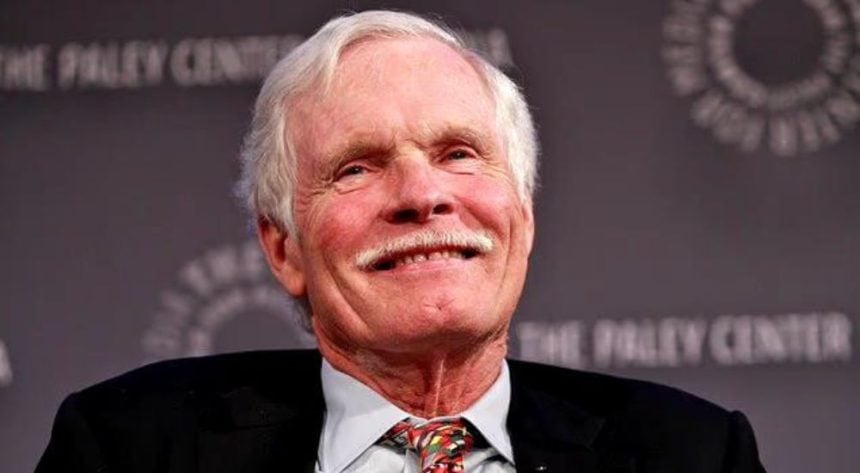
Ted Turner, the media businessman who founded CNN died at the age of 87. He died peacefully on Wednesday, surrounded by family, according to Turner Enterprises.
Contents
Launched 24-hour news television
Built a media network
Expanded through sports
Recognition and influence
Philanthropy and global causes
Environmental efforts
Health and later years
Early career path
Leadership and legacy
Personal life
Exit from business
Family
Below are key facts about his life and impact:
Launched 24-hour news television
Turner founded CNN on June 1, 1980, introducing the first 24-hour news channel and changing how audiences follow global events.
READ ALSO:CNN To Layoff 200 Staff Amid Attempts To Modernise Business
Built a media network
He moved from billboards into broadcasting, turning an Atlanta TV station into a national superstation in 1976. His business later grew to include CNN International, TNT, Turner Classic Movies and Cartoon Network.
Expanded through sports
Turner invested in sports broadcasting and owned teams including the Atlanta Braves and the Atlanta Hawks, using television to reach wider audiences.
Recognition and influence
In 1991, he was named Time magazine’s Man of the Year for his role in shaping modern news coverage.
Philanthropy and global causes
He founded the United Nations Foundation and supported campaigns against nuclear weapons. In 1997, he pledged $1 billion to the United Nations.
READ ALSO:CNN President, Jeff Zucker Resigns After Failing To Disclose Secret Affair With Colleague
Turner supported conservation work, including reintroducing bison in the United States, and backed environmental education through the “Captain Planet” cartoon.
Health and later years
In 2018, Turner revealed he had Lewy body dementia. He also recovered from a mild case of pneumonia in early 2025.
Early career path
He took over his father’s billboard company at 24 after his father’s death and later expanded into radio and television, despite limited experience in journalism.
“I worked until 7 o’clock, and when I got home the news was over,” he once said. “So I missed television news completely. And I figured there were lots of people like me.”
Leadership and legacy
READ ALSO:CNN Reporter Protests Nigeria’s $215 Single Entry Visa Fee
“Ted was an intensely involved and committed leader, intrepid, fearless and always willing to back a hunch and trust his own judgement,” Mark Thompson, Chairman and CEO of CNN Worldwide, said in a statement. “He was and always will be the presiding spirit of CNN. Ted is the giant on whose shoulders we stand, and we will all take a moment today to recognize him and his impact on our lives and the world.”
Personal life
Turner married actress Jane Fonda in 1991, and they later divorced after 10 years, though they remained close.
“I would never love anyone like I love him,” she said. “But I just couldn’t keep moving in his world, along the surface for the rest of my life. I knew that I would get to the end of my life and regret not doing the things that I also needed to do for me.”
Exit from business
He sold his company to Time Warner in 1996 and later stepped away following its merger with AOL.
Reflecting on his life, Turner once said: “I lost Jane. I lost my job here. I lost my fortune, most of it. Got a billion or two left. You can get by on that if you economize.”
Family
He is survived by his five children, 14 grandchildren and two great-grandchildren.
Headline
Iran’s Nationwide Internet Shutdown Hits 70 Days

NetBlocks, a monitoring group, has disclosed that an internet shutdown enforced by the Iranian regime has entered its 70th day, severing key access from swathes of the population under the shadow of war.
NetBlocks reported on Friday that the blackout has now surpassed 1,656 hours, marking more than two months since US-Israeli strikes pounded Tehran and escalated across the Middle East.
“Digital connectivity is vital in times of crisis,” NetBlocks said in a post on X. “Limiting service harms those most in need – people with disabilities, students, small businesses and the general public.”
READ ALSO:US Underestimated Iran Before War – France’s Bardella
According to CNN, Iran imposed a separate internet shutdown on the country’s 92 million people earlier this year, when it launched the most lethal crackdown on anti-government protesters since the Islamic Republic’s founding 47 years ago.
CNN further reports that the latest blackout has cut off another potential lifeline for Iranian residents faced with high unemployment and economic pressure exacerbated by the US-Israeli campaign.
(CNN)
Headline
Gas Prices In US Edge Down After Two Weeks Of Increases

The cost of a gallon of regular gas in the United States (US) has edged down a little more than a penny to $4.55.
According to AAA’s readings, this marks the first decline in the average gas price after 15 straight days of increases.
The decline is minuscule compared to the large increases in gas prices over the last two weeks.
According to CNN, gasoline costs rose an average of nearly 4 cents a day during that period and had several daily increases of between 7 and 9 cents.
READ ALSO:Gas Station Explosion Rocks Calabar, Scores Injured, Property Destroyed
Also Read: Trump insists US-Iran ceasefire intact despite recent exchange of fire
CNN also reports that based on past gas spikes, it will likely take weeks for gas prices to get down below $4 a gallon.
The report, however, states that a previous two-week stretch of gas price declines only shaved 14 cents off the average price, taking the average price to $4.02, before the recent 15-day run of increases.
READ ALSO:Tinubu Signs Executive Order To Protect Nigeria’s Oil & Gas Revenue
According to CNN, it could take months for the average price to fall below $3 per gallon, as it did before the war in Iran.
CNN further reports that only one state – Oklahoma – now has an average price of less than $4 a gallon, and its average stands at $3.98. California has the highest average price at $6.16.
(CNN)

 Politics5 days ago
Fubara Clears Air On ‘Defection’ To NDC [VIDEO]
- News4 days ago
Gun Battle In Oyo Forest As Police Disrupt ₦10m Ransom Collection Plot
- Politics3 days ago
Four Fubara Loyalists Disqualified As APC Clears 21 For Rivers Reps Primaries
 Metro4 days ago
Drama As Teenagers Stage Secret Wedding With N3,000 Bride Price
- Politics3 days ago
2027: Court Rebukes Plaintiff, Lawyer In Suit Against Jonathan, Awards N1m Fine
- News3 days ago
Lagos Sanctions 15 Money Lending Companies For Sharp Practices
- Politics5 days ago
2027: Daniel-Abiodun Feud Deepens Over Senatorial Ticket For Ogun East
- News4 days ago
PAP Sends Additional 15 Scholarship Beneficiaries For Post-Graduate Studies In UK
- Sports4 days ago
CAF Introduces New Laws After Chaotic AFCON Final In Morocco
- Entertainment5 days ago
Grammy Announces Date For 2027 Awards Nominations


