
News
OPINION: I Will Make You Disappear!

Tunde Odesola
To speak tongue-in-cheek is to say, “Na Baba kill Dele Giwa.” But to speak matter-of-factly is to say, “Dele Giwa was killed in his ‘gida’”. ‘Gida’ is a Hausa word for house. If you like, add ‘gida’ to Baba, na you sabi.
It was a Sunday morning, almost 38 years ago, when a faceless porter of death delivered a letter bomb at the Ikeja house of the Editor-in-Chief of Newswatch magazine, Dele Giwa.
The then-Director, National Intelligence Agency of Nigeria, Brigadier General Haliru Akilu, had reportedly called Giwa’s wife, Funmi, thrice on Saturday, and 45 minutes earlier before the delivered letter bomb went off on Sunday; Akilu, now 76, was asking for directions to Giwa’s house when he called Funmi.
Seated in his dining room on the fateful Sunday morning, Giwa, who was having breakfast with a junior colleague, Kayode Soyinka, received the letter from his son, Billy, and seeing Nigeria’s coat of arms on the letter, said, “This must be from the President,” tearing open the letter, which tore his life apart.
Giwa’s death was more excruciating than death by firing squad because death didn’t come quickly, it was in instalments; he fought death, watching his intestines, flesh and blood splatter across the walls of his dining room like an undead cockroach struggling to move with a squashed abdomen.
In the valley of the shadow of death, the brave Giwa looked down at his shattered bowels and groin and said, “They have got me.” The dripping remains of the model journalist were lifted like a disembowelled roadkill, packed into a vehicle, and rushed to the hospital, where he gave up the ghost. What a death! What a life
MORE FROM THE AUTHOR: OPINION: Pasuma, Currency And Super Eagles’ Humiliation (2)
On October 19, it would be exactly 38 years since Giwa was blown out of existence, leaving the nation reeling in horror, with Nigerians wondering what could the then-military President, General Ibrahim Babangida, Akilu and other top security chiefs, including the Deputy Director of SSS, retired Lt. Col. A.K. Togun, be hiding that made them repeatedly shun the Nigerian Human Rights Violations Investigations Commission headed by the late Justice Chukwudifu Oputa? May the killers of Dele Giwa forever be haunted.
Apart from pricking our national conscience and calling for the trial of Babangida, Akilu, Togun and co, my reference to Dele Giwa as a metaphor for dictatorship aims to illustrate the difference between speaking tongue-in-cheek and speaking matter-of-factly, though this column is not rivalling Akeem Lasisi’s PUNCH newspaper column, which teaches Use of English.
In this discourse, I elect to speak tongue-in-cheek because the topic is about a species of primates called the rhesus monkey. You know, monkeys don’t speak human language, though they are smart animals. However, monkeys read lips and understand human sounds, which they relate to. So, I’ll speak tongue-in-cheek, not matter-of-factly, and it will take only the deep to understand me.
Writing and painting are distinct forms of human expression. Since the advent of recorded history, the quill and the ink have explored human thought and distilled imagination in vivid portrayals. On the other hand, painting is the creative stroke of the brush dipped in colourful gloss and emulsion of communication, expressing plain and esoteric meanings.
Macaca Mulatta is the scientific name of the rhesus monkey. To get a striking picture of what the animal looks like, I beg you to google ‘rhesus monkey’ and see how closely it resembles Alexi, the new monkey in the state-of-the-art Abuja zoo commissioned a little over a year ago. Combining my written description and googling the picture of the rhesus monkey will clear all doubts about the looks and identity of Alexi.
MORE FROM THE AUTHOR: OPINION: Pasuma, Currency And Super Eagles’ Humiliation (1)
Alexi is the latest addition to the growing list of animals attacking humans in Nigeria’s seat of power, Abuja. Alexi is an animal among humans. In ‘Beasts of No Nation’, maverick Afrobeats superstar, Fela Anikulapo, describes some leaders as animals in human skin.
Mulatta is the female version of mulatto. Both names refer to a person of mixed white and black ancestry. That the rhesus monkey is scientifically named Macaca mulatta may mean that this caste of primates is matriarchal. While most human communities are patriarchal, some are matriarchal, a pointer to the evolutionary interrelatedness among species in the Animal Kingdom, ìse ènìyàn ni ìse eranko.
Research shows that the rhesus monkey can be considered mixed-breed because of hybridisation between its Chinese and Indian subspecies. Over the years, however, the rhesus monkey has been admixed with many other species, which ostensibly include the African caste.
Humans and monkeys indeed have an enduring relationship. In 1948, Man put the rhesus monkey in a one-passenger rocket but the monkey died during the space flight. Not to make the monkey family hard done by, on June 14, 1949, Man put another rhesus monkey named Albert II, on a one-passenger space flight, becoming the first primate and first mammal in space.
I do not know if Alexi, the latest tyrannic monkey in Abuja, is related to Albert II or not. But I know Alexi doesn’t have half the brain of Albert II. Unlike Alexi, Albert II was certainly not an idiot. To fly a space rocket, Albert II couldn’t have been a conceited bully and hateful megalomaniac. The space flight Albert II successfully executed in 1949 and the disgraceful behaviour displayed by one of his great-grandsons, Alexi, in Abuja, show that, for Alexi, sawdust lies in the place where Albert II had brains.
Since time immemorial, Man has found the monkey a good ally in security provision and groundbreaking medical research, thereby permitting monkeys to live among humans.
MORE FROM THE AUTHOR: OPINION: Discussing Portable, Apostle Suleiman, Fufeyin And Chosen Liars (1)
One of the lucky monkeys privileged to live among humans is Alexi who operates in the Abuja zoo. Alexi, like humans, sleeps in bed, walks on two legs, drives cars and eats eggs. Because of the deeds of some of his forebears, including Albert II, Alexi was entrusted with a position in the Legislative Assembly.
One day, arrogance and ambition gripped Alexi as he looked in the mirror and noticed the striking resemblance he shared with Man. He smiled and said to himself, “Look at yourself, Alexi! Look at you! Who can ever know that you’re originally a monkey? Ol’ boy, it’s high time you transmuted fully into Man.”
He is so obsessed with vainglory and power that he thinks only about himself and feels he can get away with anything. One day, he conjured the spirit of Ìjímèrè, the forebear of all monkeys.
Ìjímèrè appeared in his hairy glory – an oblong head above a narrow chest, long slim hands, scratchy nails, slitty eyes, angular legs and a lipless mouth. Alexi told Ìjímèrè he wants to become human. Ìjímèrè rebuked Alexi for not being contented with his place in nature, warning that shame lay ahead of the journey the young monkey was about to embark on.
Alexi cried and begged Ìjímèrè to tell him the secret of how to turn into a human being. Ìjímèrè pleaded with his descendant but Alexi wouldn’t listen. So, Ìjímèrè told him what to do.
“Alexi, my descendant,” Ìjímèrè began, “I can see that self-conceit, overambition and power drunkenness are behind your wish to become human. You’re not doing it for the sake of the lineage. This is not the first time an enwe would attempt to become human. Each past attempt ended in disaster. Before I grant your wish, however, I will summon Lágídò, so that I can have a witness.”
Ìjímèrè recited some monkey chants and Lágídò appears. “You summon me, Great One,” said Lágídò, looking around and settling her eyes on Alexi.
“Yes, I did,” Ìjímèrè said, adding, “It’s one of our descendants,” pointing to Alexi, “Who wants to become human. I have tried to dissuade him from towing the path of destruction but he won’t listen. So, I want to grant him his wish by revealing to him the secret of how to become human. I only want you to be my witness.”
Ìjímèrè coughed deeply and continued, “Alexi, here are three taboos you must desist from – to become human. One, you must never touch snails. Two, you must never look down on Man. Three, you must be humble.”
“Is that all, Baba Ìjímèrè?” asked an anxious Alexi. “No, it remains one more thing,” Ìjímèrè said, “You must sit for three hours by your gate every night for seven days, wearing simple clothes, reciting the panegyrics of our lineage and doing deeds of kindness.”
“Yes, Baba,” Alexi scrambled to his feet from where he knelt and hurtled out without saying goodbye.
Lágídò said, “Doom looms ahead of the prideful and impatient fellow. The signs of ominous disaster are clear.”
On his seventh day at the gate, a short man bolted towards Alexi, holding a package in his hands, beckoning to Alexi. Alexi became livid with rage, “How dare you subhuman beckon to me? Can’t you come to me? Do you know who I am? Imagine this rat? I can make you disappear!”
Email: tundeodes2003@yahoo.com
Facebook: @Tunde Odesola
X: @Tunde_Odesola



News
PAP Sends Additional 34 Foreign Post-graduate Scholarship Beneficiaries To UK Varsities
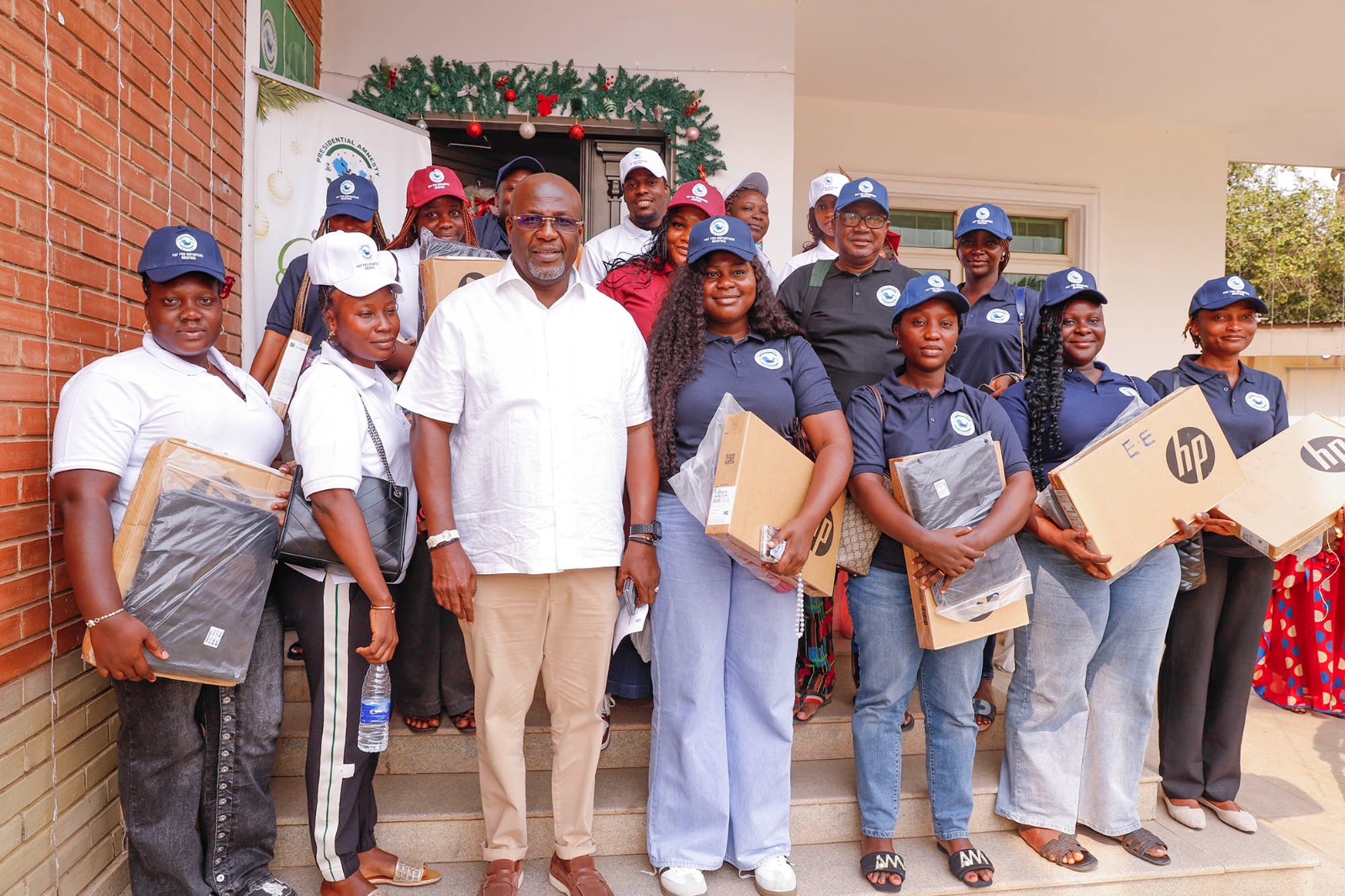
The Presidential Amnesty Programme (PAP) has deployed an additional 34 foreign post-graduate scholarship beneficiaries to various universities in the United Kingdom for the 2025-2026 academic year.
This was contained in a statement made available to newsmen in Warri by Mr Igoniko Oduma, Special Assistant on Media to Dr. Dennis Otuaro, the Administrator, PAP.
According to the statement, the scholars’ programmes include data science, fintech analytics, cyber security, international energy law and policy, construction project management, public health, agri-food technology, electrical and petroleum engineering, among others.
The statement added that more foreign post-graduate scholars will be sent to UK universities in the current academic session.
“In December 2025, nine students, who were the first set of offshore post-graduate scholarship developments by the PAP Administrator, Dr Dennis Otuaro, for the 2024-2025 academic year, graduated from their various programmes in UK universities.
READ ALSO:PAP Scholarship Scheme Vehicle For Better Future For Niger Delta —Otuaro
“Otuaro has deployed over 9000 students to universities within and outside Nigeria for different industry-relevant programmes since he assumed office in March 2024,” the statement partly reads.
Speaking at the pre-departure orientation programme for the scholars at the PAP headquarters in Abuja, on Thursday, Otuaro said that the large-scale deployment was aimed at making the Niger Delta a knowledge-driven region.
He said that his leadership reinvigorated the programme to give it a new momentum in service delivery to the people of the region based on the mandate of President Bola Tinubu.
Otuaro said, “We are sending all of you for post-graduate studies in various universities in the United Kingdom.
“The PAP now has a new momentum and direction because of the repositioning and broad reforms that we carried out in line with the mandate of His Excellency, President Bola Ahmed Tinubu GCFR.
READ ALSO:Otuaro Tasks Media On Objective Reportage
“The objective behind the huge scholarships deployment is to ensure that we develop the needed human capital to transform the Niger Delta and generate knowledge-wealth.
“We want to develop relevant manpower in critical disciplines for our region and by extension, the country, because you are expected to contribute your quota to national development after successful graduation.”
The PAP boss, who was represented at the event by his Technical Assistant, Mr Edgar Biu, advised the scholars to study hard to achieve academic excellence in their various fields of research.
According to him, the scholars have an obligation to justify the Federal Government’s investment in their education and future.
READ ALSO:I’m Not Distracted By Anti-Niger Delta Elements, Says PAP Boss, Otuaro
He reiterated his warning that beneficiaries should not take for granted the opportunity to further their academic pursuits in the interest of the Niger Delta and indeed the country.
Otuaro expressed appreciation to President Tinubu for his “enormous interest and support for the Programme”, particularly the approval of an upward review of the programme’s budget from N65billion to N150billion.
He also expressed gratitude to the National Security Adviser, Mallam Nuhu Ribadu, for his impeccable guidance and supervision of the programme’s initiatives.
Otuaro, therefore, cautioned the scholars to obey their host country’s laws and the rules and regulations of their various institutions, stressing that they are ambassadors of Nigeria, the Niger Delta and their communities and families.
Highpoint of the orientation programme was the presentation of laptops to the scholars to help them in their studies.
News
Industrial Court Bars Resident Doctors From Strike

The National Industrial Court in Abuja has issued an interim injunction restraining the Nigerian Association of Resident Doctors (NARD) and its agents from embarking on any form of industrial action, including strikes, go-slows, picketing, or preparatory steps for protest, from Monday, January 12, 2026.
Justice E.D. Subilim ordered that the injunction remain in force pending the hearing of the motion on January 21. The suit was filed by the Attorney General of the Federation (AGF) and the Federal Government against NARD, its president, Dr Mohammad Suleiman, and Dr Shuaibu Ibrahim.
The court order comes days after resident doctors at the Usmanu Danfodiyo University Teaching Hospital (UDUTH), Sokoto, declared their full support for the nationwide strike announced by NARD over the government’s alleged failure to honour critical welfare and training agreements.
UDUTH doctors cited the non-reinstatement of five disengaged resident doctors at the Federal Teaching Hospital, Lokoja, unpaid promotion and salary arrears, and incomplete implementation of the Professional Allowance Table as key grievances. Other unresolved issues include withheld specialist allowances, delayed house officers’ salaries, postgraduate training certification delays, and deteriorating hospital infrastructure.
READ ALSO:Resident Doctors Suspend Strike, Issue Fresh Four-week Ultimatum
However, NARD had on Tuesday noted that there was no going back on the industrial action, insisting that the strike is necessary and not politically motivated. Speaking in Abuja, Dr Suleiman said the withdrawal of services from midnight on Monday is a response to “unmet commitments, shifting government positions and worsening working conditions for resident doctors, not partisan considerations.”
He argued that none of the demands outlined in the Memorandum of Understanding signed with the Federal Government on November 27, 2025, have been implemented.
“Every issue is either at the same point where it was when we signed the MoU or we have even gone backwards,” Dr Suleiman said, adding that claims by the Ministry of Health that some issues had been resolved were misleading.
He further challenged the government to show where N90 billion, allegedly allocated in the 2026 budget for health workers’ professional allowances, has been provided.
READ ALSO:Doctors’ Strike Continues As NARD Demands Fair Deal, Better Pay
The association also demanded the immediate reinstatement of the five disengaged resident doctors at FTH Lokoja with full back pay and rejected plans to redeploy them elsewhere.
Other grievances include delayed promotion arrears across 62 tertiary institutions, non-recognition of specialist certificates, and outstanding salary and allowance payments affecting nearly 40 percent of resident doctors.
While NARD remains open to dialogue and has appealed to President Bola Ahmed Tinubu for decisive intervention, it warned that unless concrete action is taken, the planned industrial action will go ahead, potentially disrupting healthcare services nationwide. Dr Mujitaba Umar, President of the UDUTH chapter, described the situation as “difficult but unavoidable,” while the chapter’s General Secretary, Dr Muhammad Abdulrahman Hassan, urged the Federal Government to act swiftly “in the interest of the Nigerian populace and the healthcare system.”
News
Nigeria To Get Fresh $9.5m Abacha Loot From UK’s Jersey
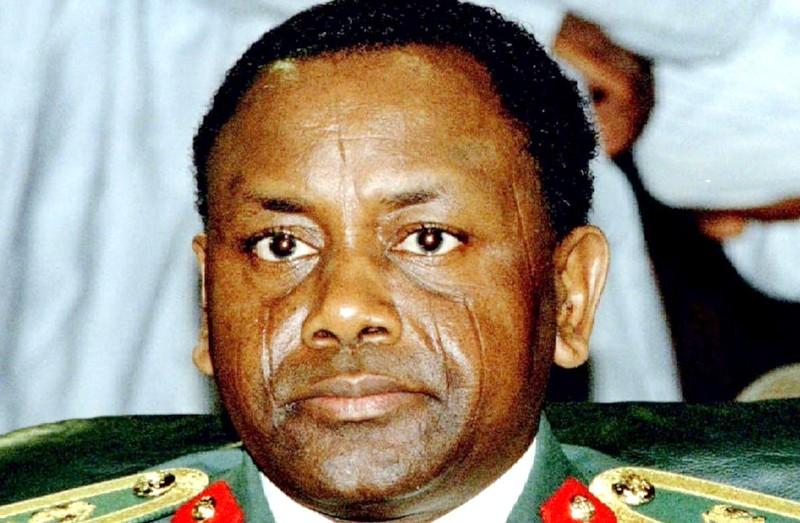
Nigeria to receive fresh $9.5 million (£7 million), believed to be stolen funds linked to former military Head of State, Sani Abacha, from the United Kingdom’s Jersey.
According to the BBC, Jersey has agreed to repatriate the fund to the Nigerian government.
The money, described as proceeds of “tainted property,” is said to be part of the vast fortune stolen by Abacha, who ruled Nigeria between 1993 and 1998.
READ ALSO:How I Transited From Abacha’s Friend To prisoner — Lamido
The funds were kept in a bank account in Jersey and had been tied up in legal proceedings for several years.
Although the assets were first recovered during the administration of former President Goodluck Jonathan, court challenges stalled their return to Nigeria. Progress was made in December 2025 when Jersey’s Attorney-General, Mark Temple, signed a memorandum of understanding, MoU, with Nigerian authorities to enable the repatriation.
The latest agreement builds on two earlier arrangements between Jersey and Nigeria that led to the return of more than $300 million (£230m) in recovered assets.

 News3 days ago
How To Calculate Your Taxable Income
- Business5 days ago
NNPCL Reduces Fuel Price Again
- Metro5 days ago
AAU Disowns Students Over Protest
- Headline3 days ago
Russia Deploys Navy To Guard Venezuelan Oil Tanker Chased By US In Atlantic
- Metro3 days ago
Edo widow-lawyer Diabolically Blinded Over Contract Seeks Okpebholo’s Intervention
- Metro5 days ago
Edo: Suspected Kidnappers Kill Victim, Hold On To Elder Brother
- Metro3 days ago
JUST IN: Court Grants Malami, Wife, Son N500m Bail Each
- Entertainment3 days ago
VIDEO: ‘Baba Oko Bournvita,’ Portable Drags His Father, Alleges Bad Parenting, Extortion
- Metro5 days ago
Nine Soldiers Feared Dead In Borno IED Explosion
- Politics3 days ago
2027: Details Of PDP Leaders, Jonathan’s Meeting Emerge


