
News
OPINION Generals, Marabouts And Boko Haram

By Lasisi Olagunju
General Lucky Irabor wrote a book that attracted a gathering of Generals in Abuja last Friday. Irabor, in the book, describes the January 1966 coup as “a shield that became a sword;” a solution that became a problem. He may be right. Bishop Matthew Kukah, who reviewed the book, described the January 1966 coup as the nation’s primary crime scene. I disagree. Nigeria’s real crime scene is located far before 1966. We still have not learnt any lesson.
General Irabor is the immediate past Chief of the Defence Staff. Born 5 October, 1965, he was a baby – three months, ten days old – when January 1966 happened to Nigeria. General Olusegun Obasanjo wrote the Foreword to the book and chaired the Abuja gathering. I have not seen what he wrote in the Foreword but I heard what he said at the book launch. He said Boko Haram was not about politics and not really about religion. So what is it about? He suggested that frustration and lack of “better life” perverted the pervert. He then wondered why terror and terrorism have become Nigeria’s way of life.
There were other Generals there. One of them is the Sultan of Sokoto; he belonged in the Armoured Corps. Another is the Etsu Nupe. Both of them left the army as Brigadier-General. The Sultan said Generals don’t retire. And because they do not retire or get tired, we keep seeing them in our lives beyond the barracks. Irabor’s book launch turned out to be a confab of Generals in search of what eludes them on the battlefield – victory over the collective enemy.
They were there looking for a solution to Nigeria’s interminable terrorism. I watched them and reached for 16th century English statesman, scholar and saint, Sir Thomas More. In his ‘A Dialogue Concerning Heresies’, More wrote a line which became the idiom: “looking for a needle in a haystack.” Our Generals need to interrogate that English clause locked in seven words of frustration. It speaks to their gathering. What they seek they won’t find except they really want to see it.
Irabor’s book carries the title: ‘Scars’ in bold, capital letters of blood. Beyond quotes from the review, I have not seen the book to get what his ‘SCARS’ really talks about. But ‘scars’ as book or as sabre cuts on the face cannot be anyone’s sweet story.
MORE FROM THE AUTHOR:OPINION: Dangote’s Oily Wars
Bishop Kukah, the book reviewer, said Irabor’s story is about Nigeria’s scars of insecurity; the ugly, unhealed, unhealable wound gashed on our collective face by Boko Haram. President Goodluck Jonathan was there with the Generals; and he got the metaphor right. He said the abduction of Chibok Girls is an everlasting scar on the face of his presidency; he hinted that it was a monument to leadership failure. But is Jonathan the only one with that scar?
Nineteenth century Scottish novelist and essayist, Robert Louis Stevenson (R. L. Stevenson) wrote ‘Treasure Island’, an excellent novel of pirates and blood, hidden treasure chests, death and disappointments. It was published in 1883. If you read more of Stevenson beyond his popular fiction, you would likely come across where he wrote the truth that our “wealth took their value from our neighbour’s poverty.” You would read how this someone who lived and died 131 years ago saw that despite the “free man’s” pretence to kindness, “the slaves are still ill-fed, ill-clad, ill-taught, ill-housed, insolently entreated, and driven to their mines and workshops by the lash of famine.” The passage reads like it is about 2025 Nigeria and its unfed, unclaimed, unclad, untaught children.
I watched the cream of Nigerian Generals, serving and retired, on Friday at that book launch of one of them. I watched them pontificating, one by one, on TV about Nigeria and its scars and I remembered Major-General Sir Thomas Vandeleur in R. L. Stevenson’s ‘The Rajah’s Diamond’, a story in his ‘New Arabian Nights’ published in 1881. Thomas Vandeleur is a General in blind, desperate but fruitless search for his family’s lost jewel. Nigeria’s Generals, like Vandeleur, old adventurers in uniform who once held the diamond of power, have ruled and been ruined by it. The nation’s story, like Vandeleur’s, is one of obsession with that fatal jewel called authority, which brings suffering to all who covet it.
Our Generals are helpless. That is what I saw at that event on Friday. Power has cast Nigeria’s fortunes into the river of defeat; it has left generations searching the muddy depths for the nation’s lost promise. Dethroned by coups and transitions, Nigeria’s power elite always come back as “handsome tobacconists” of democracy, reinvented messiahs and born-again democrats. They trade in influence and illusion; their scars, like Stevenson’s Vandeleur’s, are the marks of past violence disguised as experience, and their continued grip on Nigeria’s destiny shows that, though the diamond of nationhood is lost, its curse endures.
When I get General Irabor’s book to read, I will search for words that define wounds inflicted by bad and absent leadership, by aborted dreams and betrayed hopes. I will look for phrases, for sentences and paragraphs on heists that cut deeper into the nation’s face. I will love to read through its jagged pages of dreams deferred.
I scanned the Generals’ faces and read their lips. The gashes of insecurity, from Boko Haram’s bombs in Borno to herders’ bullets in Kwara, are the handiwork of decades of neglect and decay. The scar of insecurity has become our national birthmark, neither healed nor hidden; its permanence mocks every promise of reform. Obasanjo said at the book event that “Boko Haram is now virtually becoming part of our life. Should we accept that? If we should not accept it, what should we do? How much do we know? Even from the other side, and from this side, have we been active enough? Have we been proactive enough?” If a General and former president asked us those questions, to whom should we then turn for answers? Like Vandeleur’s scar, Nigeria’s wounds carry an ambiguity; they are signs of survival, yet also of complicity, for we are all, in one way or another, marked by a bad story we refuse to rewrite. General Irabor has done very well by writing a book that has provoked a discourse. We wait for others.
MORE FROM THE AUTHOR:OPINION: Hobbes, Nigeria, And Sarkozy
The Generals who spoke were very eloquent on the scars of Boko Haram. Did I not hear excuses for what the terrorists do and why they do them? One of the Generals even said “they (Boko Haram) never said book is haram.” Valuable minutes were spent doing definition of terms. Is that also a solution to the problem? They said so much but I didn’t hear a word from the Generals on the millions of out-of-school children who feed the machinery of terrorism and banditry. Today, Nigeria has an estimated 20 million out-of-school children, the highest number in the world. Read United Nations’ records: More than 60 percent of these children are in the northern states; they are the almajiri; the system is there till tomorrow; entrenched.
Was it not General Obasanjo who wrote in one of his books that “our fingers will not be dry of blood” as long as lice abound in our clothes? I agree with him.
Because we are a dirty, contaminated nation, lice keep laying their nits in the seams of our garments. The line of Boko Haram lice is lengthened daily by mass child illiteracy and adult disillusionment. Our Generals would not acknowledge that the poverty of our streets is both symptom and scar: proof of the violence of neglect and the betrayal of the future. They, and we, still do not see that in every Almajiri begging for miserable morsels of leftovers, the nation’s unhealed wounds find new violence and new weapons.
Then, there is Bishop Kukah’s jarring charge that marabouts have become a substitute for government and governing. He hinted that we’ve outsourced the leadership of the nation to some “blind clerics” somewhere. That statement should strike a chord with all who heard him. But because it is true, all who heard it pretended it was not said.
The Bishop was on solid ground when he uttered what he said. The proofs are everywhere: In August 2015, the Adamawa State government announced that it had earmarked N200 million to engage prayer warriors against Boko Haram. In March 2016, a certain Aminu Baba-Kusa, once a powerful executive director of the NNPC, appeared before the High Court in Abuja with a witness statement and disclosed in it that a total of ₦2.2 billion was expended, not for arms or intelligence, but for prayers, solemnly commissioned to hasten the fall of Boko Haram. The money went out in two waves: ₦1.45 billion first, then another ₦750 million. It was a contract sanctified by faith and sealed by silence.
Nothing that has happened in the last ten years suggests a change of strategy. Marabouts still cash out from a mugu nation and a leadership that worships in unworthy shrines. Kukah stepped on toes; he said the manipulation of religion for politics, using religion to enforce power, has become destructive to religion in northern Nigeria. It took remarkable episcopal courage for Kukah to say publicly that northern politicians use Islam for political cash-out. I watched the Sultan, calm and angry at Bishop Kukah for daring to stray away from the book he was asked to review into a realm angels fear to tread. As the Sultan spoke, the TV man’s camera panned to a defiant Kukah fiddling with a piece of pamphlet.
Speaker after speaker spoke on what they thought caused insecurity in northern Nigeria. I waited in vain to hear the Generals acknowledge that northern children, denied books and purpose, are the soldiers of chaos in Zamfara, Sokoto, Niger and, now in Kwara. In vain I listened to hear the truth from our Generals that today’s violent elements, products of a past of negligence, are proof that unattended scars can erupt again in new forms of pain.
MORE FROM THE AUTHOR:OPINION: On El-Rufai, Aláròká And Terrorists
Our Generals are searching for what is not lost. The spring head of terror and terrorism in northern Nigeria is the wrong religious philosophy which atrophies millions of children. Every child anywhere, including in northern Nigeria, wants and deserves what General Obasanjo called “better life.” A child who has opportunities for self-discovery and development won’t be readily available for employment by merchants of terror. Terrorism will dry out the moment its recruitment market winds up. Educating the street children of the North, and equipping them with the right skills will sound the death knell of Boko Haram and banditry, its brethren. But this is where even the Generals feared to tread last Friday. They were afraid of the clerics in whose hands lie the yam and the knife of power and privileges.
The people who spoke at that event were not up to ten. Several scores of other big men and women were there, silent and quiet, sometimes clapping. They either did not have the chance to be called to speak or they did not want to speak and be quoted into trouble. But, really, what is trouble? Trouble can sneak into the hole of silence. Jeff T. Johnson writes in his ‘Trouble Songs’ that “Trouble may appear in a title and disappear in a song,” and “’Trouble’ may sneak up in a song without warning.”
Trouble is Nigeria, the sick, denying its illness. Real trouble is homicidal or suicidal silence; it is treating eczema when leprosy is the ailment.
So, at the risk of courting abuse and insults and threats, I join Bishop Kukah in urging Nigeria to stop keeping quiet in the face of evil. Enough of saying that you do not want to ruffle feathers or open old wounds. Wounds that refuse to heal should be opened and given the right medicine. That is what heals.
A broken nation, sworn to silence, or to denial of truth, hurtles down a roller coaster of failure. Silence scars with ugly gashes. Screaming within, yet saying nothing out is sickness. The Yoruba say silence is the foundation of misfortune. Speaking out does not mean you will die young, broke and broken. Not speaking out when you have a voice is no guarantee for safety and comfort. Bishop Kukah’s Hausa proverb is the ultimate counsel here: “Not going to the toilet does not mean you won’t be hungry.”



News
New Tax Laws: Suspend January 2026 Implementation — Senator Ndume Tells Tinubu
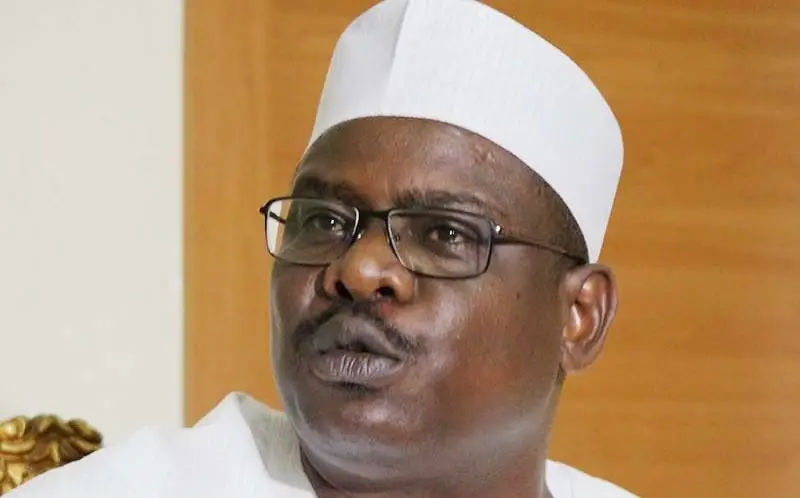
Former Senate Leader, Ali Ndume has appealed to President Bola Ahmed Tinubu to suspend the January 1, 2026, implementation of the country’s new tax laws amid growing controversy.
The federal lawmaker made the appeal in a statement he issued on Wednesday in Abuja.
This comes as the Nigerian Bar Association demanded the suspension of the implementation.
Recall that a member of the House of Representatives, Abdussamad Dasuki, had last week called the Parliament’s attention to alleged alteration to the tax laws.
READ ALSO:FIRS Confirms NIN As Tax ID
Chairman of the Presidential Fiscal Policy and Tax Reforms Committee, Taiwo Oyedele, in an interview on Arise Television on Wednesday, called for calm over claims of alterations in tax laws and urged Nigerians to allow lawmakers to complete their investigation before drawing conclusions.
Speaking on the ongoing controversy about the tax laws, Ndume noted that proceeding with the implementation without getting to the root of the alleged forgery will create a legitimacy challenge for the tax laws.
His statement read, “With the controversy surrounding it, the President should constitute a team to verify the veracity of the claim and act accordingly.
“As the responsive leader that he has always been, he should look at it to find out if the copy that was signed and the claim of alterations are genuine so that he will do the needful to bring the controversy to rest.
READ ALSO:US Threatens To Sanction Countries That Vote For Shipping Carbon Tax
“If not, the controversy will continue.” That is to say, the tax law will not be implemented, because you can’t build on nothing.
“So, Mr. President should suspend the implementation until the issues are resolved because so many civil society organizations, the Arewa Community, and the Nigerian Bar Association are saying that he should withdraw the tax law and investigate the allegation of forgery.”
“Therefore, Mr President should get to the root of the allegation of forgery. The small committee that will be set up should look into it while the House of Representatives does its own.”
News
Tambuwal Engages Security Agencies As US Airstrikes Hit Own LG In Sokoto
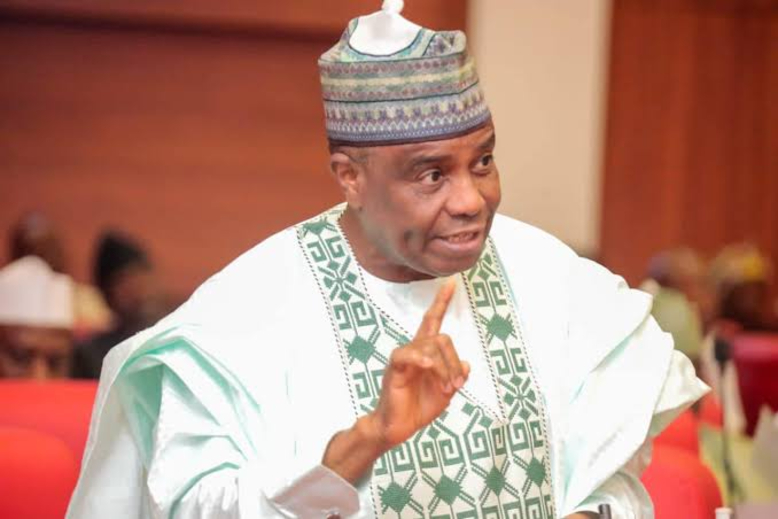
Senator Aminu Waziri Tambuwal, representing Sokoto South, has called on residents of Sokoto State to remain calm following reports of United States airstrikes targeting ISIS-linked terrorists on Christmas Day.
In a statement posted on his personal X account, the former Sokoto State governor said he was aware of reports concerning the airstrikes, which marked a direct US military action in Nigeria based on intelligence about ISWAP threats, and urged citizens to remain law-abiding while authorities clarify the situation.
“I have noted the reports concerning an airstrike carried out as part of ongoing counterterrorism efforts through cooperation between the federal government of Nigeria and the United States,” Tambuwal said. “I urge our communities to remain calm and law abiding as relevant authorities clarify the circumstances surrounding the operation.”
READ ALSO:US Dept Of War Shares Video Of Air Strikes In Nigeria
Tambuwal assured constituents that he was engaging with relevant security agencies to obtain full details of the operation and to ensure that necessary things were in place to protect civilians.
“I wish to assure the people of Sokoto South that I am in active talks with relevant security authorities to obtain full details and ensure that all necessary safeguards are upheld,” he added.
The senator emphasised that counterterrorism operations were aimed strictly at criminal and terrorist elements threatening public safety, not innocent civilians who are often victims of insecurity. He stressed that the protection of civilian lives must remain central to all legitimate security actions.
He further called on community leaders, traditional institutions and residents to work closely with security agencies by sharing credible intelligence and resisting misinformation capable of causing fear or heightening tension.
News
Rep Moore Confirms 12 Tomahawk Missiles Launched In Sokoto
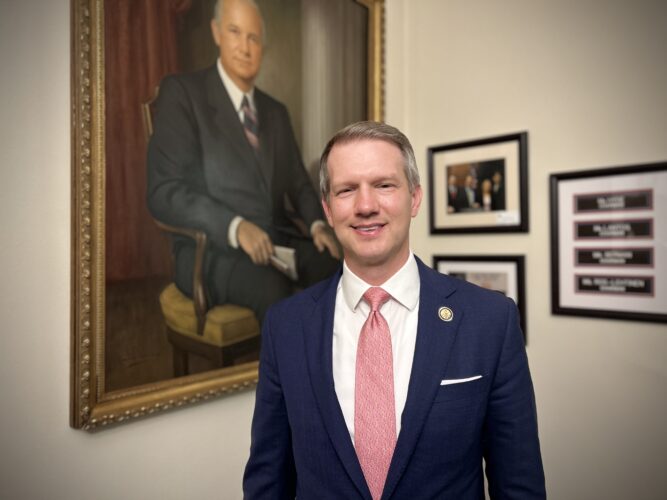
No fewer than 12 Tomahawk missiles were on December 25 launched against terrorists in Sokoto State by the United States military.
Rep Riley M. Moore, the lawmaker representing Virginia’s Second District in the Congress, confirmed this in an interview with Fox News.
The US military operated in Sokoto State on Christmas night, bombing terrorists killing innocent people in parts of Nigeria.
READ ALSO:Trump’s Airstrikes: Halt Military Cooperation With US Immediately – Sheikh Gumi Tells Tinubu Govt
Some security analysts claimed on Friday that the operation was unsuccessful and had no significant impacts on the targeted terrorists.
According to them, the airstrikes landed in safe places including farms where there was no history of terrorists’ hideout.
But details began to emerge on Friday night, indicating that several terrorists were killed during the joint operations between the US army and it’s Nigerian counterpart.
READ ALSO:Nigerian Ringleader Of Nationwide Bank Fraud, Money Laundering Jailed In US, Says FBI
Moore said: “This year, thanks to President Trump, Radical Islamic Terrorists were on the receiving end of 12 Tomahawk missiles as a present.
“The successful strikes on ISIS, in coordination with the Nigerian government, is just the first step to secure the country and end the slaughter of our brothers and sisters in Christ”.
DAILY POST reports that residents of Sokoto State have been panicking since the US military operation.

 News4 days ago
UBTH CMD Marks 120 Days In Office, Expresses Commitment To Providing Conducive Working Environment
- News4 days ago
FIRS Confirms NIN As Tax ID
- Metro4 days ago
Fintiri Pardons Man Sentenced To Death For ‘Killing Herdsman In Self-defence’, Others
- News3 days ago
JUST IN: Kano Lawmaker, Sarki Aliyu Daneji, Dies Hours After Colleague’s Passing
 News5 days ago
OPINION: My Man Of The Season
- News3 days ago
FULL LIST: Churches That Don’t Celebrate Christmas
- News5 days ago
KWAM 1 Withdraws From Awujale Race, Ends Court Challenge
- Metro4 days ago
Petrol Tanker Crashes Into Akpabio’s Convoy, Kills Police Dispatch Rider
- Headline2 days ago
JUST IN: US Forces Bomb Terrorists Camps In Nigeria
- News2 days ago
Okpebholo Slams ₦25bn Libel Suit On Edo PDP Chairman


