
Headline
OPINION: Is This The Renewed Hope Nigerians Subscribed To?
By Richard Asoge
In anticipation to get the economy fixed for growth and development after some years of cankerworm, corruption and leakages, Nigerians came out putting aside propaganda on Saturday, February 25th, 2023 and voted relatively for the presidential candidate of All Progressive Party (APC), Bola Tinubu. The support he got from the people was not unconnected to the way he had built bridges among people of different culture, religion and ethnic groups, how he remodel Lagos during his tenure as governor between 1999 and 2007 and most importantly, how his political wizardry will turn the fortune of the country for good if eventually elected president.
The declaration of ‘subsidy is gone’ in the inaugural speech on May 29th, 2023 by President Bola Tinubu may be a landmark decision considering what had happened in the past in the oil sector but the policy effect thereafter was weighty. Nobody ever thought it can go so deep and far this way before the desired results will be achieved or that the policy effect will be evaluated after some weeks of implementation to consider initiating another policy to absorb, to some extent, the negative effect of the sudden and total subsidy removal on petrol but this was not really so.
While grappling with the effect of the fuel subsidy removal, within two weeks, unification of exchange rate took its stand. Of course, no right-thinking Nigerian having the knowledge of how very few but connected ones were eaten fat from the common patrimony of the nation which persistently made the foreign reserve to nosedive would oppose the unification of exchange rate. The twin effects of the fuel subsidy removal and exchange rate unification with insecurity without another policy measure within three or six months to crowd-out these effects brought us to this ugly situation we find ourself today.
MORE FROM THE AUTHOR: Inflation: Where Are We Going From Here? [OPINION]
We have never had it so high and rapid as far as inflation is concerned in the last 28years. Going by what National Bureau of Statistics published for May 2024 (year on year basis), inflation is 33.95 percent. Breaking it down further into components, food was the most dreaded among them with 40.66 percent on a year on year basis. Agricultural produce is fast declining as a result of insecurity in the hinterland and tropical forests. To make things worse, the current generation of youth do not see faming as a vocation worthy of practicing but spending productive hours on social media.
There is a strong connection between diet and illness. The more nutritious your food is, the higher the immune system to resist any sickness. The current outbreak of cholera in most of the states is traceable to consumption of junks. Average income of individual is far below what can keep life together. Naira has lost its purchasing power and has led many to consume half rotten if not totally rotten foods. Hunger reflects on the faces of individual with no end in sight. An hungry man is an angry man, goes an African proverb. Poverty is getting wider. Only God knows the current position Nigeria occupies among hunger nations. In 2023 it ranked 109 of the 125 selected countries with 28.3percent in the hunger index.
One of the things highlighted to bring relieve to commuters was conversion of vehicles to Compressed Natural Gas (CNG) type. How many vehicles have been successfully converted to CNG? and what is the ratio to the population of vehicles? One year has gone now with no significant success in the conversion ratio to the 2027 target.
MORE FROM THE AUTHOR: 2024 Budget: What Average Nigerian Wants?
Before oil dominated the structure of Nigeria economy, internal factors determined prices of goods and services and not external factors like exchange rate. Recently, crypto currency and related activities joined the external factors. The more an economy is linked to foreign transaction for survival, the higher the risk politically, socially and economically. Believing and placing our local goods and services above foreign ones is a sure cure.
To fight hunger and bring down the foods’ prices, real action of all is needed. Ministry of Agriculture or Departments related to agriculture across the tiers of government must practice agriculture in full scale. Local government, been the closest to the people, must practice farming as their leading business ventures. For those that may not have land to practice, it is not bad to have memorandum of understanding with the neighboring local government or state. In year 2016, Lagos State followed that path during the tenure of Akinwumi Ambode as governor by having an arrangement with Kebbi State under the leadership of Atiku Bagudu in the production of rice branded as ‘Lake Rice’. Other states or entity can copy such model and fine tune it if needed and bring something good out of it. No state is idle without having comparative advantage in one area over others. Continuity of policy is our greatest enemy. Lake Rice production only lasted for six years and nothing of such is heard thereafter.
Now that the revenue of various tiers of government has substantially increased, it shouldn’t be an avenue for political office holders to increase their entitlements at the expense of majority whose activities generated the revenue but opportunity to close deficit gaps of basic infrastructure. This takes me to the new minimum wage being negotiated between Federal Government and Nigeria Labour Congress with other concerned parties. N62,000 been offered as minimum wage by Federal Government or N100,000 been canvassed for by many analysts shouldn’t be the primary concern of most Nigerians but the sustainability and the value of every naira in the market place. if N100,000 or more is sealed and gazette today as new minimum wage but only to realize after two months that $1 goes for N4,000 and every other price of local items assumes exponential rise including items that do not have any foreign input, will it make economic sense? Definitely, none. Another negotiation may not come up until five years. This is why price stability should be a serious concern.
Hope of average Nigerian is renewed when there is food on the table and price stability is ensured.
Richard Asoge
08081492614
chards001@gmail.com



Headline
Coup: Guinea-Bissau Junta Releases Six Held Opposition Politicians
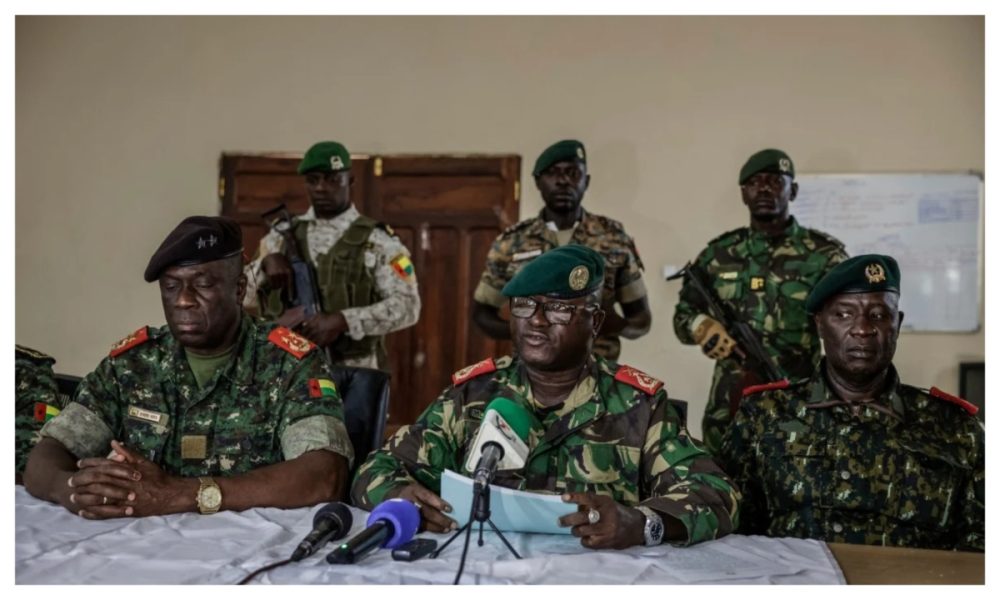
Guinea-Bissau’s ruling junta on Tuesday released six members of the political opposition who had been detained since a coup last month.
The six freed opposition members are said to be close associates of Domingos Simoes Pereira, head of the PAIGC party that led the country to independence in 1974.
Pereira has been in custody since the coup.
In a statement by the High Military Command, the junta’s governing body, the releases are described as a sign of good faith and a step towards the return to constitutional normality and respect for international rights.
READ ALSO:Why West African Troops Overturned Benin’s Coup But Watched Others Pass
The army seized power on 26 November after ousting outgoing President Umaro Sissoco Embalo in the wake of a presidential vote.
After taking over, the military suspended the electoral process and announced it would take control of the West African country for a period of one year.
Recall that another opposition candidate, Fernando Dias, took refuge in Nigeria’s embassy, which granted him asylum, while Embalo fled the country after being briefly detained by the military at the time of the coup.
Meanwhile, Senegal’s Foreign Minister, Cheikh Niang, led a delegation to Guinea-Bissau, where he met with detained opponents and requested their release.
Headline
7 Territories Still Under Colonial Rule

Even though most nations became independent in the last century, some territories are still ruled by other nations.
Contents
1. Western Sahara
2. Guam
3. American Samoa
4. United States Virgin Islands
5. Falkland Islands / Malvinas
6. Gibraltar
7. Bermuda
Many of them remain on the United Nations list of non-self-governing territories, meaning they have not completed the process of decolonization. These places usually depend on bigger countries for laws, passports, defence, or political control.
In this article, Nigerian Tribune highlights 7 territories still under colonial rule:
READ ALSO:Nigeria Ranks World’s 102nd Happiest Nation, US, Germany Not Among 20 Top Counties
1. Western Sahara
Western Sahara remains one of the world’s biggest unresolved colonial issues. Morocco controls most of the territory, but the Polisario Front wants independence for the Sahrawi people. The UN is still trying to help both sides agree on a peaceful solution.
2. Guam
Guam is an important US territory in the Pacific, used heavily for American military operations. The US oversees its defence and foreign relations.
People living there are US citizens, but they cannot vote in presidential elections and do not have full representation in Congress.
READ ALSO:FULL LIST: US To Review Green Cards From 19 ‘Countries Of Concern’ After Washington Shooting
3. American Samoa
American Samoa has more local control than Guam, but the United States still decides immigration, defence, and foreign affairs.
Residents are considered US nationals and must apply if they want full citizenship.
4. United States Virgin Islands
The US Virgin Islands have their own legislature, but the United States makes major constitutional and political decisions. The territory depends heavily on US federal support.
5. Falkland Islands / Malvinas
The Falkland Islands remain controlled by the United Kingdom (UK), but Argentina has long disputed this claim, having been in control of the Islands for a few years before 1833.
The people living there voted strongly to stay British, yet the sovereignty dispute continues to appear in the UN.
READ ALSO:Six Countries With Highest Number Of Billionaires In 2025
6. Gibraltar
Gibraltar sits at the Southern tip of Spain. The United Kingdom controls it, but Spain insists the territory belongs to them.
Gibraltarians have repeatedly voted in favour of remaining British, but the dispute is still discussed within the UN Decolonisation Committee.
7. Bermuda
Bermuda is a British Overseas Territory situated in the North Atlantic Ocean. Although it manages most of its own internal affairs and enjoys a strong economy with modern facilities, the United Kingdom still handles its defence and represents it in global matters.
Headline
Russia-Ukraine War: Pope Leo Calls For Global Christmas Truce
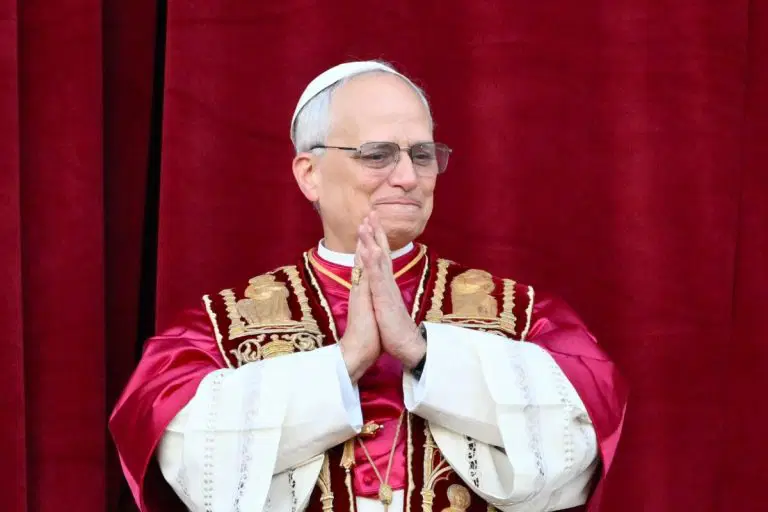
Pope Leo XIV on Tuesday renewed his call for a global truce on Christmas Day, saying he felt “great sadness” after Russia “apparently rejected a request” for a pause in fighting.
Speaking to reporters at his residence in Castel Gandolfo near Rome, the Pope urged all sides involved in conflict to observe at least one day of peace.
“I am renewing my request to all people of goodwill to respect a day of peace — at least on the feast of the birth of our Saviour,” Leo said.
Recall that Russia invaded Ukraine in February 2022 and has repeatedly turned down calls for a ceasefire, arguing that any pause would give Ukraine a military advantage.
READ ALSO:Russian Strikes Kill Five In Ukraine, Cause Power Outages
“Among the things that cause me great sadness is the fact that Russia has apparently rejected a request for a truce,” the pope said.
Referring to conflicts worldwide, Leo added, “I hope they will listen and there will be 24 hours of peace in the whole world.”
The appeal came as fighting continued in eastern Ukraine. On Tuesday, Ukrainian forces withdrew from a town after heavy battles with Russian troops. Russian strikes killed three civilians and left thousands without power during winter temperatures.
READ ALSO:Trump Blasts Ukraine For ‘Zero Gratitude’ Amid Talks To Halt War
There was no indication of progress toward ending the war after separate meetings last weekend in Miami between the United States officials and negotiators from Russia and Ukraine. The conflict is nearing four years with no settlement in sight.
Earlier this month, Pope Leo met Ukrainian President Volodymyr Zelensky. When asked whether he would accept Zelensky’s invitation to visit Ukraine, the pope said, “I hope so,” while noting that it was not possible to say when such a visit could happen.
Leo also warned that efforts to secure peace without European diplomatic involvement were “unrealistic”, expressing optimism that President Donald Trump’s proposed peace plan could bring a “huge change” to the transatlantic alliance.

 News3 days ago
PHOTOS: New Era In Furupagha-Ebijaw As Okpururu 1 Receives Staff Of Office
- News2 days ago
UBTH CMD Marks 120 Days In Office, Expresses Commitment To Providing Conducive Working Environment
- News3 days ago
FG Declares Public Holidays For Christmas, New Year Celebrations
- News3 days ago
OPINION: Gumi And His Terrorists
- News2 days ago
FIRS Confirms NIN As Tax ID
 News3 days ago
OPINION: My Man Of The Season
- News3 days ago
OPINION: Christmas And A Motherless Child
- Metro2 days ago
Fintiri Pardons Man Sentenced To Death For ‘Killing Herdsman In Self-defence’, Others
- News2 days ago
KWAM 1 Withdraws From Awujale Race, Ends Court Challenge
- Metro2 days ago
Petrol Tanker Crashes Into Akpabio’s Convoy, Kills Police Dispatch Rider


